 AI
AICeylon
Sri Lanka's golden ticked islander — small, sunny and affectionate, Italy's favourite secret.
| Size | Small |
|---|---|
| Weight | 3–5 kg |
| Life expectancy | 12–16 years |
| Origin | Sri Lanka |
| Type | Natural breed (Sri Lanka) |
| Grooming | low |
| Activity needs | high |
| Beginner friendly | well suited |
Temperament & suitability
Editorial assessment based on the FIFe breed standard and breed association data.
Guideline for movement & enrichment for this breed.
Traits
Origin & history
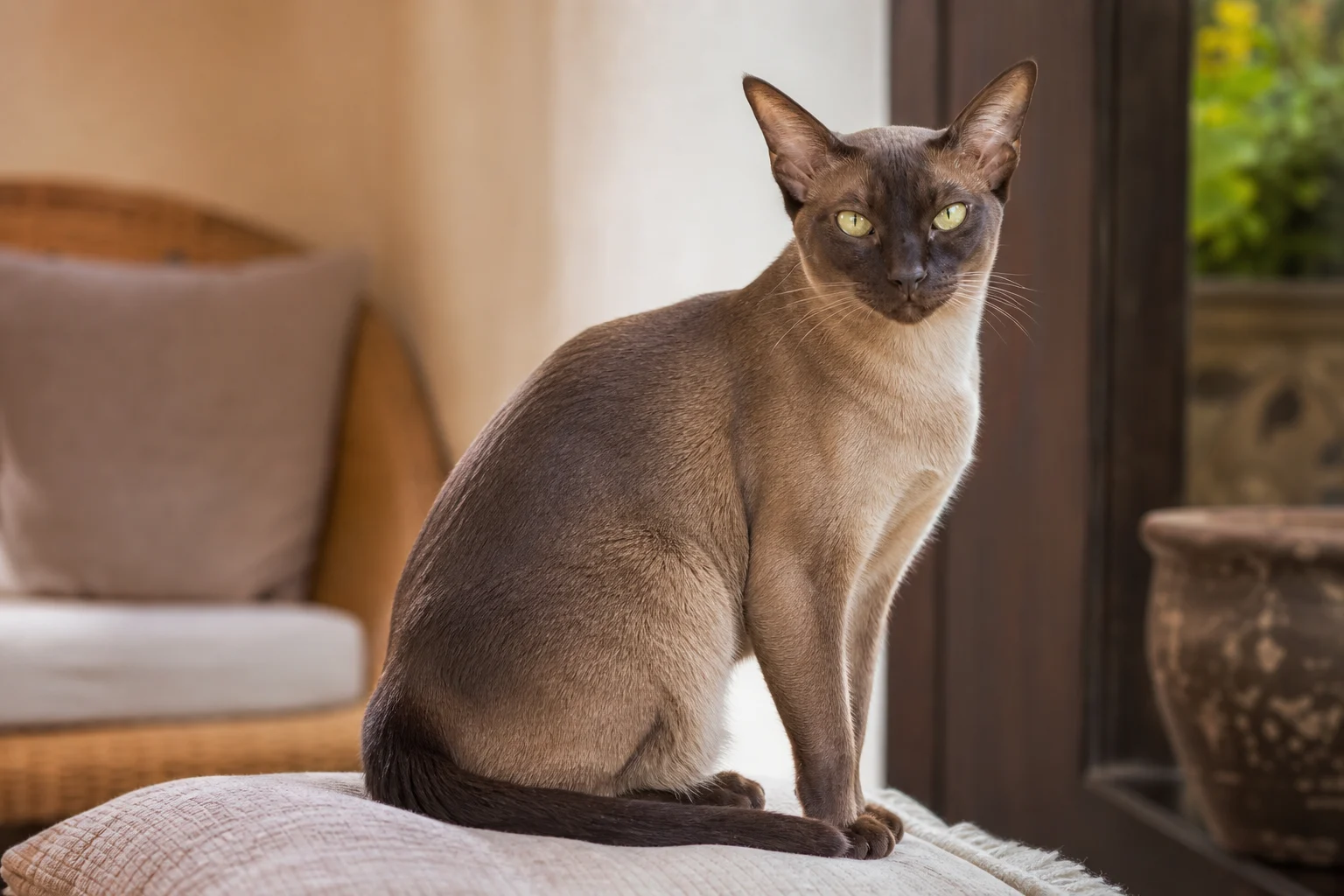
Italian veterinarian Paolo Pellegatta encountered small golden ticked cats on Sri Lanka in 1984 and brought founders to Milan — the only breed developed primarily in Italy, from the island once called Ceylon. The type resembles the Abyssinian at first glance but is its own landrace: the "manila" ticked golden ground with bars on head and legs, compact build and the gentle island temperament. FIAF standardised it; the breed remains rare even in its Italian homeland.
Appearance & size
A compact three-to-five-kilogram cat — smaller and rounder-cheeked than the Aby — in fine ticked coat: golden "manila" ground with darker ticking, plus blue, red and silver variants, always with the delicate head-and-leg barring. Large expressive eyes trace the island heritage; the whole cat glows like late afternoon sun.
Personality & temperament
Island sociability in a small frame: the Ceylon is lively, affectionate and people-near — it follows, chats softly, plays with lasting enthusiasm and settles onto laps between missions. Fanciers describe an uncomplicated, cheerful companion that combines Aby-style curiosity with noticeably more cuddle time and less whirlwind.
Indoor or outdoor living
Content indoors with climbing paths and daily play; a secured balcony delights the sun-seeker. The rarity deserves safety nets. Frame in Indoor cat or outdoor cat?
Enrichment & activity
Daily merry sessions: teaser hunts, ball chases, puzzle feeders. Energy sits cheerful mid-range — engaged but not exhausting.
Grooming
A weekly polish for the fine ticked coat; shedding is light.
Feeding & health
Landrace-sound: no known breed-specific diseases; general checks and gene-pool questions are the standard asks given the small population. Portion via the food amount calculator.
Costs
Kittens cost €800–1,200 via the small Italian-centred breeder circle — a genuine search north of the Alps. Running costs are small-cat modest; the cat cost calculator totals them.
For beginners, children and other pets
A sunny family companion: playful with children, sociable with cats and gentle dogs, beginner-friendly and uncomplicated. The Ceylon delivers ticked-coat charm at family-livable intensity — the honest alternative for everyone the Aby outruns.
Similar breeds compared
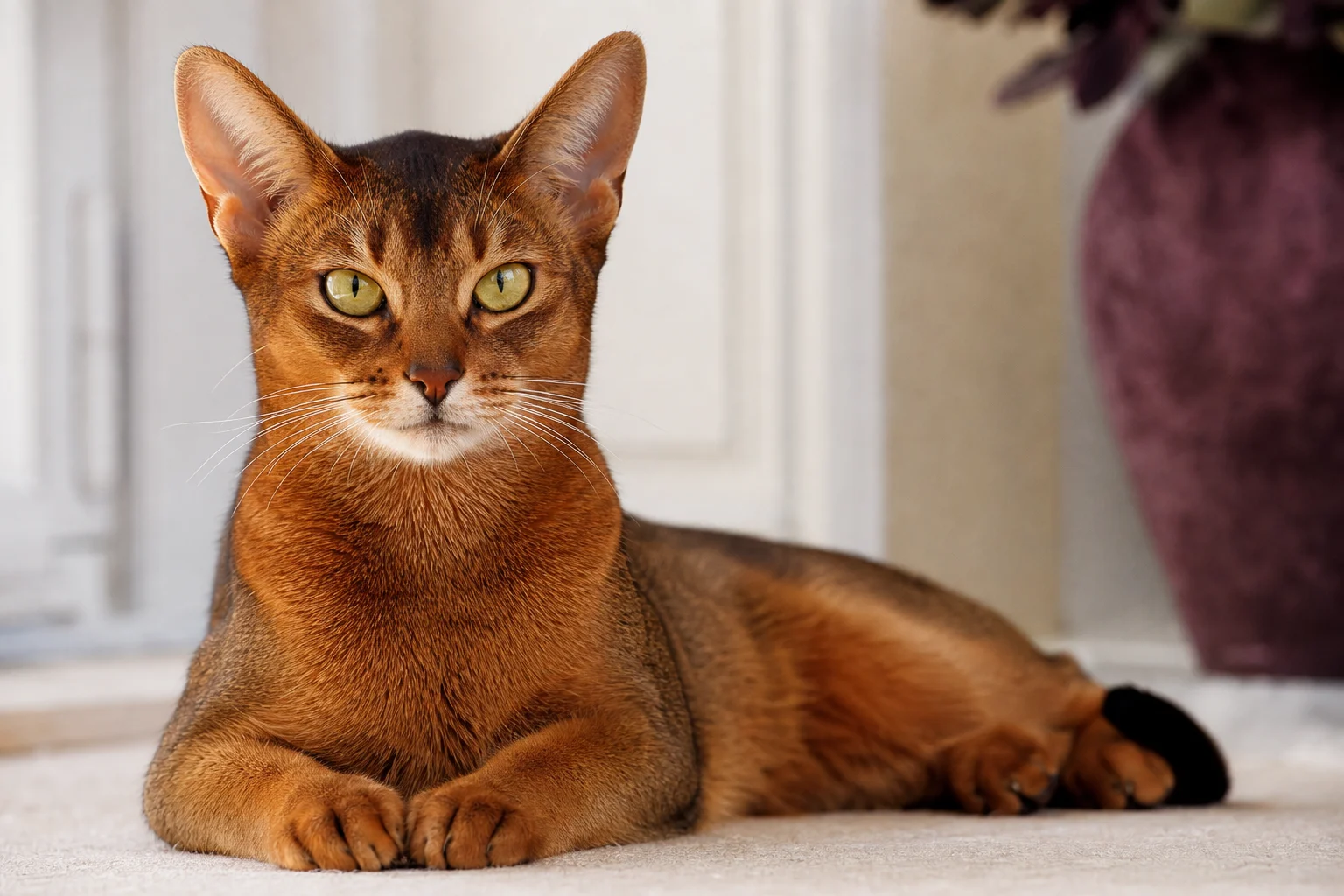
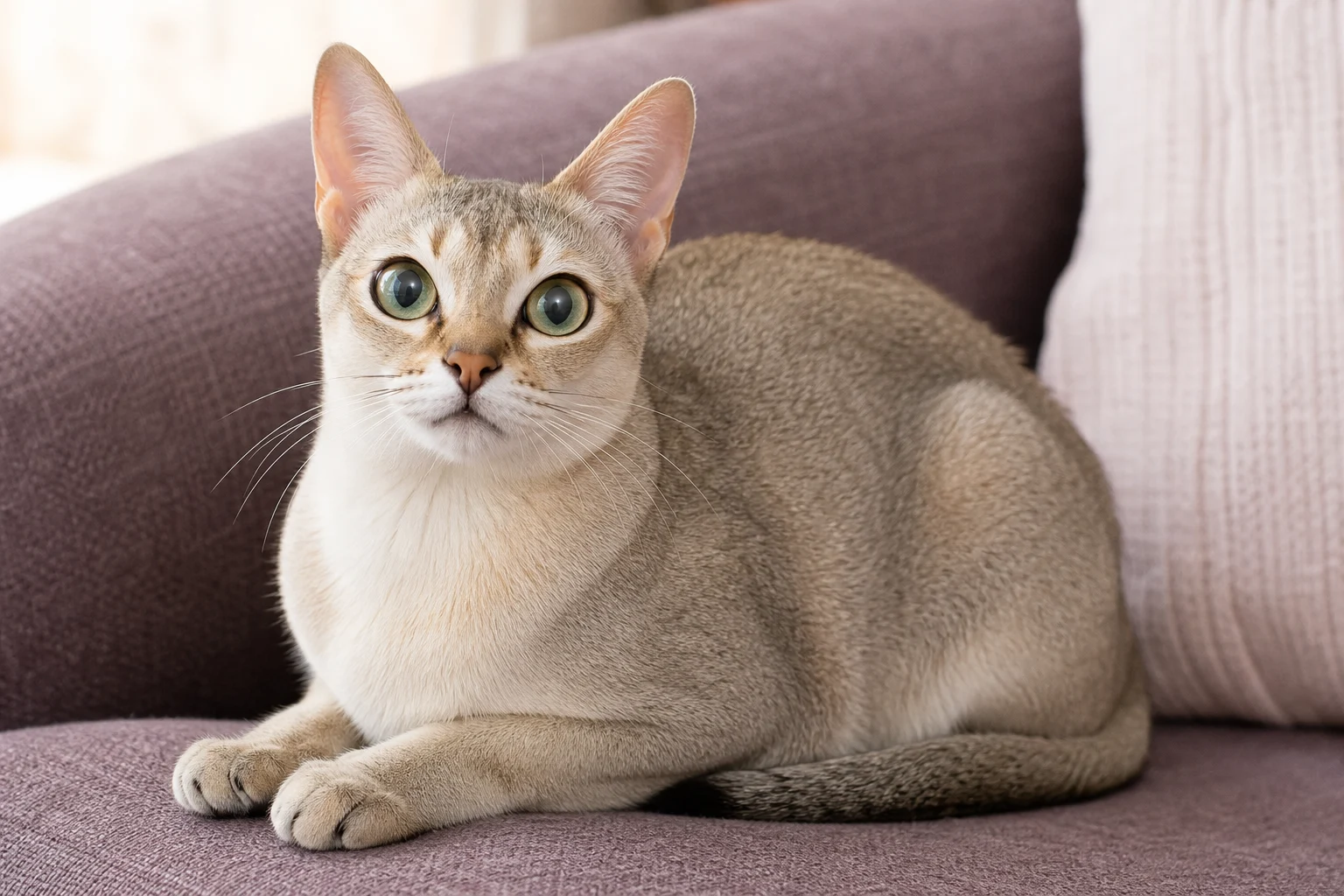
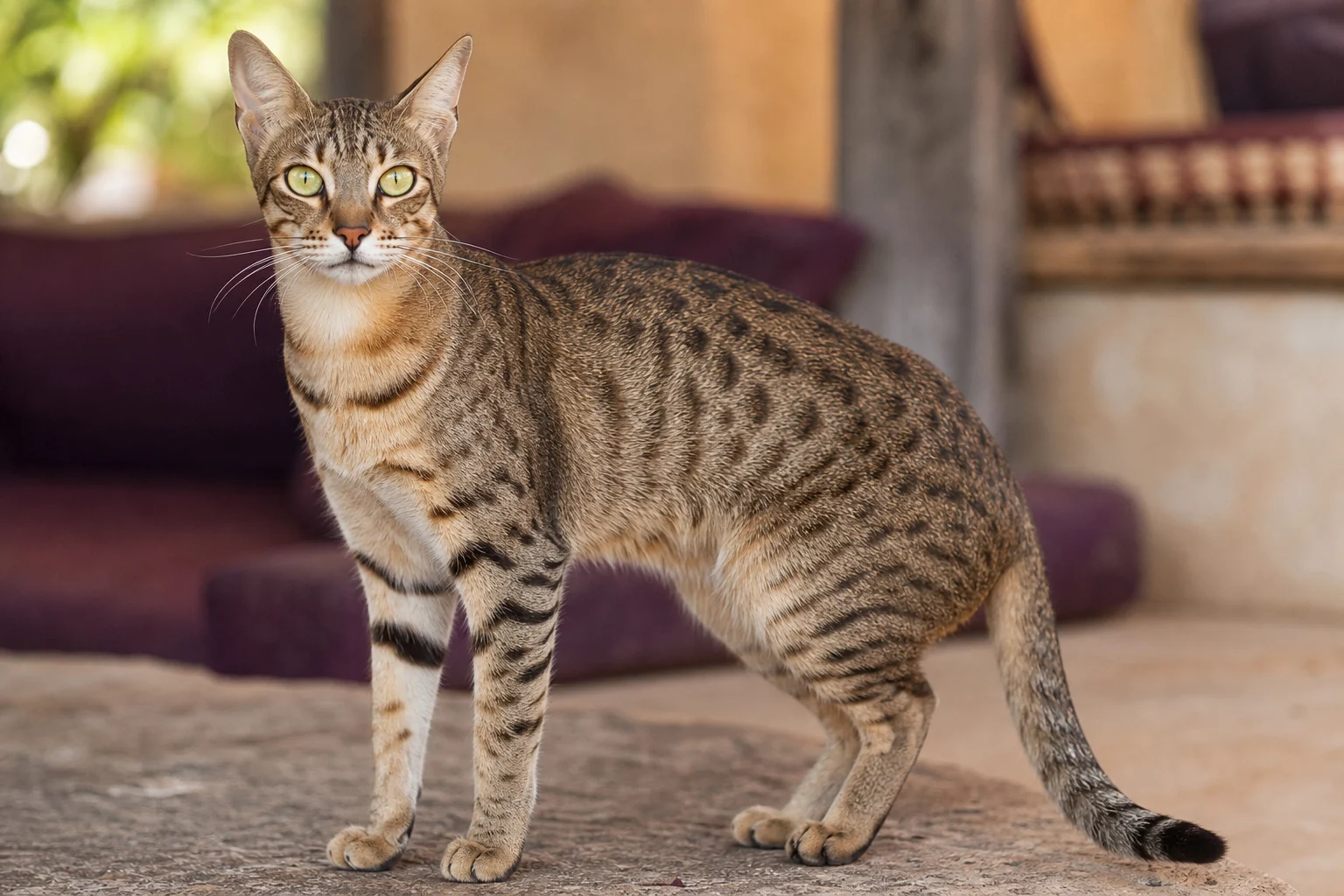
The Abyssinian is the bigger, busier ticking relative; the Singapura the small-format sepia parallel; the Sokoke the wilder African landrace cousin.
Who this breed suits
Families and first-timers who want golden ticking with island ease. The "Which cat fits me?" test confirms the sunny fit.
Not sure what a Ceylon may eat? The food checker rates individual foods on a traffic-light scale, and the food guide explains what cats can eat and what is toxic.
A good fit for you if …
Frequently asked questions
How does the Ceylon differ from the Abyssinian?
Its own landrace: smaller, rounder-cheeked, with head-and-leg barring on the manila ground — and noticeably more cuddle time at less whirlwind.
What is the manila colour?
The breed's golden signature ground with darker ticking — late-afternoon sun as a coat.
Where is the breed bred?
Primarily in Italy, where the founders arrived from Sri Lanka in 1984 — the only breed developed mainly there.
Which health questions matter?
General checks and gene-pool management — the landrace base carries no known breed diseases.
Are Ceylons good family cats?
Very: cheerful, affectionate and uncomplicated with children and other pets.
How rare is the breed?
Rare even in Italy — plan a patient cross-border search.
Similar breeds
Sources: FIFe/TICA breed standard · breed association data · editorial assessment · Last updated 08/2026. On health questions this article never replaces a visit to the vet.