 AI
AIBurmilla
An accidental aristocrat — silver shimmer, kohl-lined eyes and Burmese warmth at listening volume.
| Size | Medium |
|---|---|
| Weight | 3–6 kg |
| Life expectancy | 12–16 years |
| Origin | United Kingdom |
| Type | Pedigree breed |
| Grooming | medium |
| Activity needs | medium |
| Beginner friendly | well suited |
Temperament & suitability
Editorial assessment based on the FIFe breed standard and breed association data.
Guideline for movement & enrichment for this breed.
Traits
Origin & history
London, 1981: a lilac Burmese awaiting her arranged match met a Chinchilla Persian tom when a cleaner left a door open — and the four silver kittens of that unplanned night founded a breed. Baroness Miranda von Kirchberg formalised the happy accident; "Burmilla" fuses both parents' names. The breed inherited the Chinchilla's sparkling silver tipping and painted-on eyeliner over Burmese build and warmth — aristocracy by accident.
Appearance & size
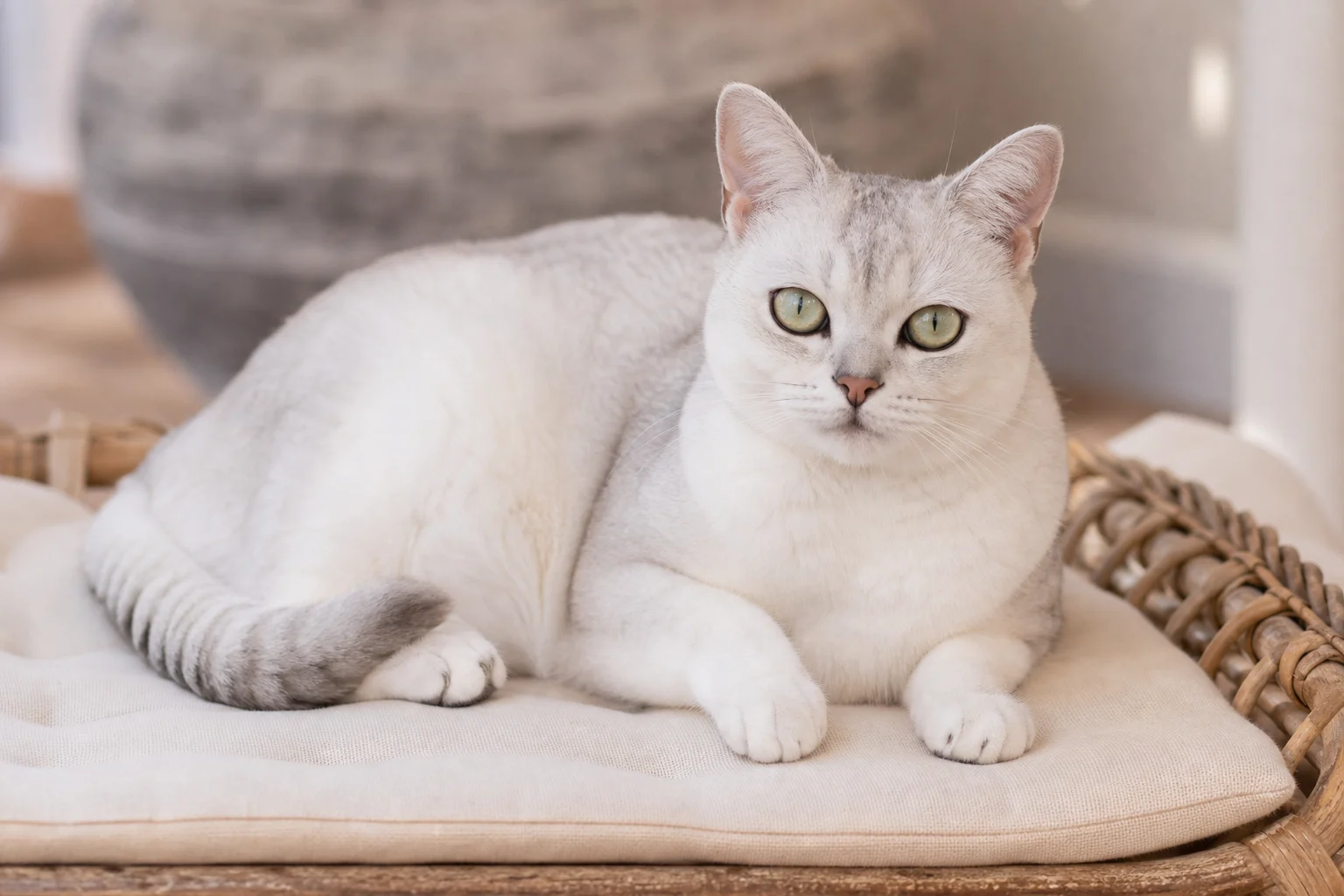
A softly muscular cat of three to six kilograms whose coat sparkles: each hair silver at the base, tipped or shaded in black, blue, brown or cream, creating a shimmer that moves with the cat. Green eyes rimmed in dark "kohl" — as if lined by hand — plus matching dark nose liner complete the made-up look. Shorthair dominates; a semi-longhair variant drifts in gentle plumes.
Personality & temperament
The Burmilla mixes its parents kindly: Burmese sociability softened by Chinchilla calm. It is affectionate and people-near without velcro extremes, quietly chatty rather than loud, playful in comfortable doses and typically kitten-silly well into adulthood. Visitors get friendly curiosity; the family gets a warm, easy companion that adapts to the household's tempo.
Indoor or outdoor living
An uncomplicated indoor cat: moderate space, a good tree, window entertainment and a secured balcony cover it. The trusting friendliness stays behind safety nets. It handles reasonable alone-time better than pure Burmese but flourishes with company — a second easy cat fits well; frame in Indoor cat or outdoor cat?
Enrichment & activity
Middle-range and merry: daily teaser sessions, puzzle feeders and occasional fetch keep the sparkle lively. The breed meets your energy rather than imposing its own — an easy guest in most routines.
Grooming
Shorthairs need a weekly polish; the semi-longhair a twice-weekly comb. The silver coat rewards the minimal effort with maximum glitter.
Feeding & health
Portion via the food amount calculator — the comfortable streak meets a good appetite. The breeder question that matters: PKD screening (Chinchilla-Persian heritage), plus hypokalaemia and HCM checks from the Burmese side. Tested lines are pleasingly sturdy.
Costs
Kittens from tested lines cost €800–1,200 — the breed remains a rarity with waiting lists. Running costs are ordinary; the cat cost calculator adds them up.
For beginners, children and other pets
A gentle all-rounder for families and beginners: patient with children, sociable with cats and calm dogs, adaptable and drama-free. Its balanced middle makes it one of the easiest pedigree choices for normal households.
Similar breeds compared
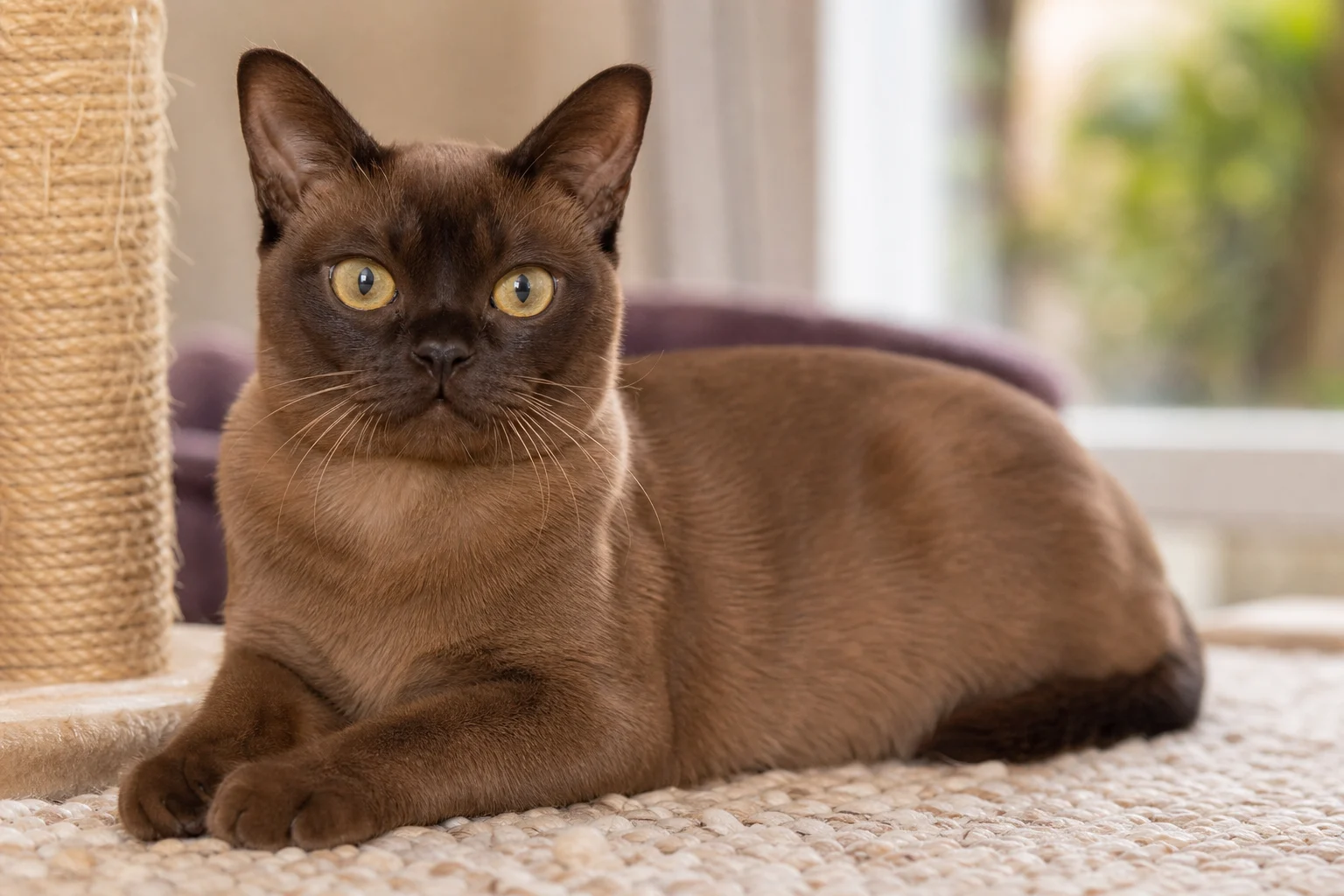
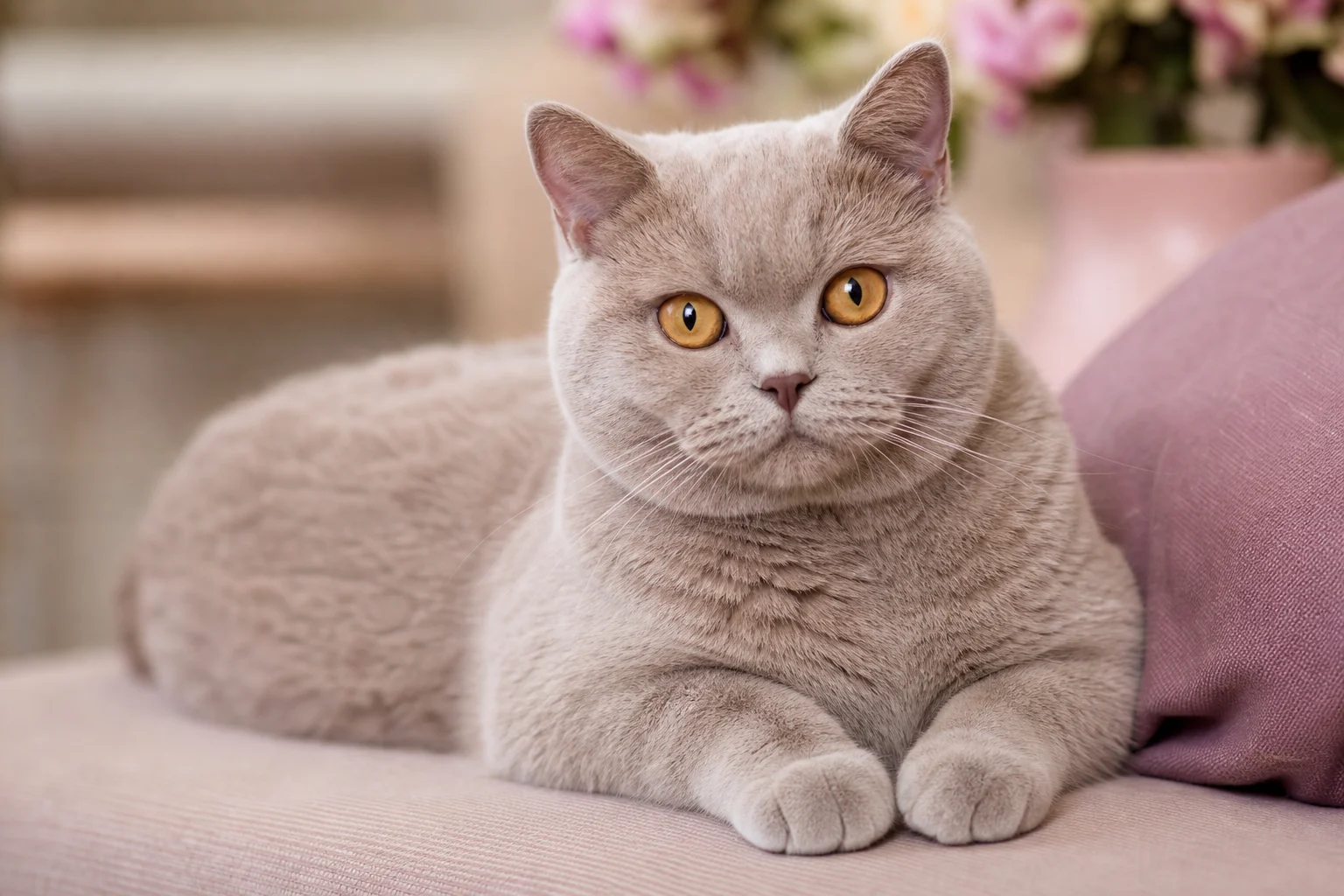
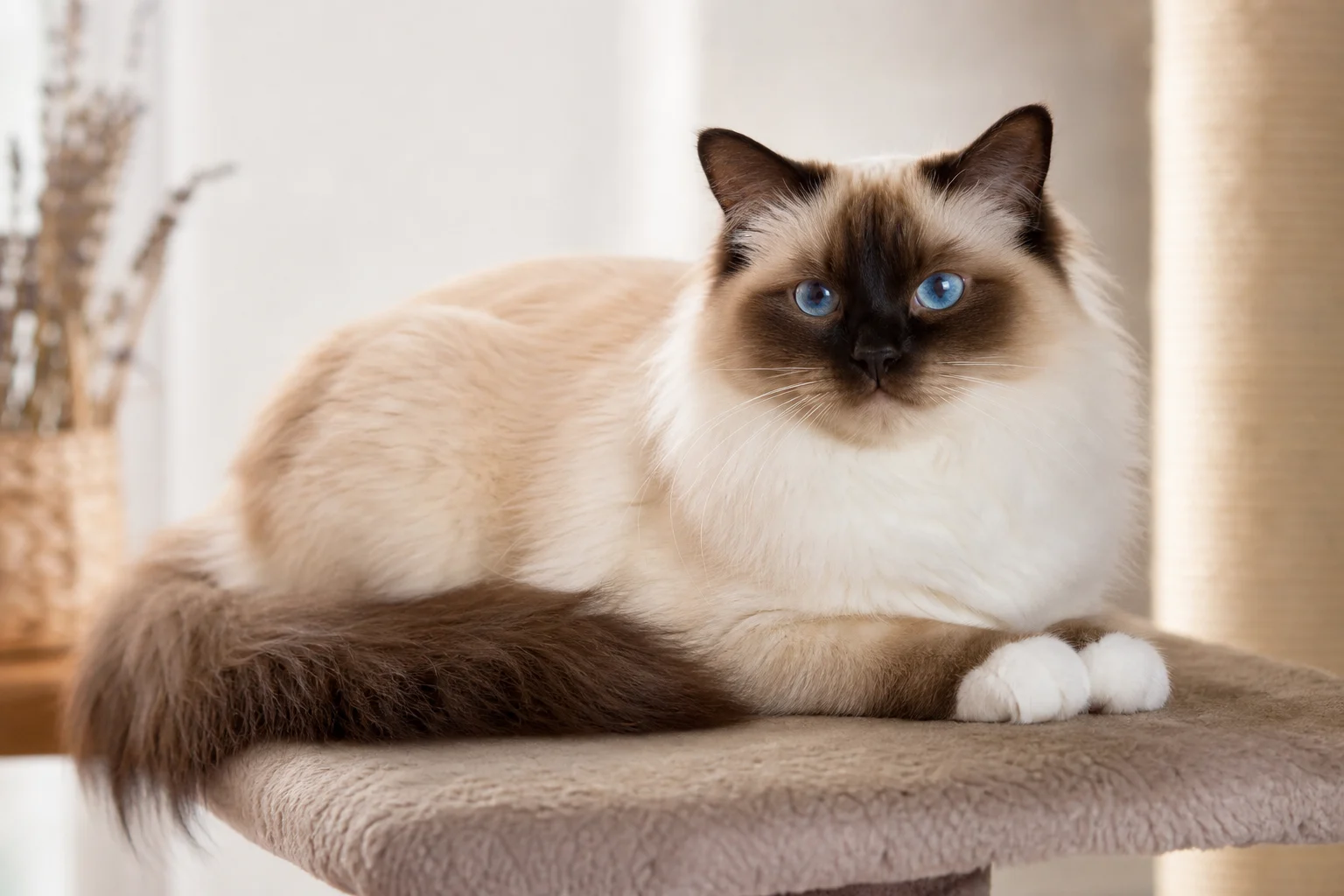
The Burmese is the warmer, clingier parent; the British Shorthair offers plush calm without the sparkle; the Birman covers the gentle-family niche in pointed dress.
Who this breed suits
Households that want Burmese warmth at livable intensity, wrapped in silver. The "Which cat fits me?" test confirms whether the accidental aristocrat fits your home.
Not sure what a Burmilla may eat? The food checker rates individual foods on a traffic-light scale, and the food guide explains what cats can eat and what is toxic.
A good fit for you if …
Frequently asked questions
How did the Burmilla really originate?
Through an open door in 1981: an unplanned night between a lilac Burmese and a Chinchilla Persian produced four silver founders. The breed name fuses both parents.
Where do the kohl-lined eyes come from?
Chinchilla heritage: dark liner rims the green eyes and nose as if painted — a breed hallmark.
Are Burmillas as clingy as Burmese?
Softer: people-near and affectionate, but with Chinchilla-calm independence. The livable middle is the breed's point.
Which health tests matter?
PKD (Persian side), hypokalaemia and HCM (Burmese side) — ask for all three.
Shorthair or semi-longhair?
Both exist; shorthair dominates. The longhair variant drifts in gentle plumes and needs a touch more combing.
Is the Burmilla rare?
Yes — a connoisseur breed with waiting lists. Plan breeder search early.
Similar breeds
Sources: FIFe/TICA breed standard · breed association data · editorial assessment · Last updated 08/2026. On health questions this article never replaces a visit to the vet.