 AI
AIAmerican Wirehair
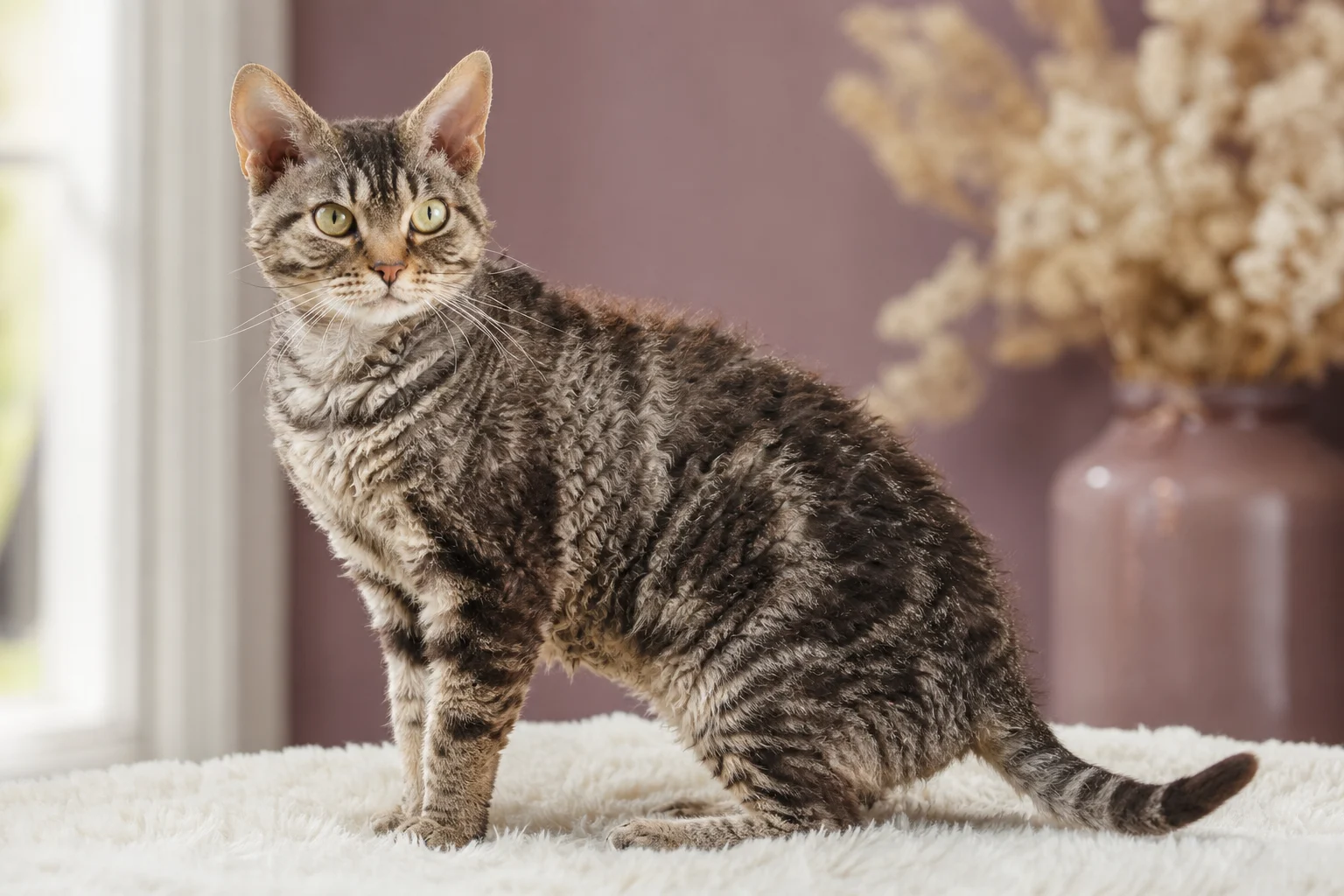
A springy steel-wool coat on farm-cat calm — America's rarest native, easy and even-tempered.
| Size | Medium |
|---|---|
| Weight | 3–6 kg |
| Life expectancy | 12–18 years |
| Origin | United States |
| Type | Natural breed (USA) |
| Grooming | low |
| Activity needs | medium |
| Beginner friendly | well suited |
Temperament & suitability
Editorial assessment based on the FIFe breed standard and breed association data.
Guideline for movement & enrichment for this breed.
Traits
Origin & history
Upstate New York, 1966: a farm litter produced Adam, a red-and-white tom whose every hair crimped, bent and hooked — a spontaneous dominant mutation found nowhere else in the world before or since. Breeders developed the line alongside the American Shorthair, whose standard it shares apart from the coat. The Wirehair remains one of the rarest recognised breeds anywhere: CFA registrations routinely count it last on the list — an American original hiding in plain sight.
Appearance & size
An American Shorthair in texture remix: three to six kilograms of sturdy working build under a springy, crimped coat — each hair bent or hooked, the whiskers often curly — that feels like gentle steel wool and varies from lightly waved to tight rings. All ASH colours occur, silver tabby included. The coat can thin seasonally; both are breed-normal.
Personality & temperament
Farm-cat equanimity throughout: the Wirehair is even-tempered, quietly affectionate, playful in comfortable doses and adaptable to whatever household it joins. It keeps the mouser reflexes under the calm, handles alone-time reasonably and meets children, cats and dogs with unflappable pragmatism — the ASH virtues, textured.
Indoor or outdoor living
Flexible: content indoors with normal play and climbing, capable outdoors where secured access exists. An easy keeper in the literal sense. Frame in Indoor cat or outdoor cat?
Enrichment & activity
Daily hunt-style play and puzzle feeders keep the sturdy frame lean; energy is friendly mid-range with generous off-duty hours.
Grooming
Counter-intuitive again: brushing can damage the crimped texture — mostly hands off, with occasional combing during moult and the odd bath if skin oil builds (some individuals run slightly oily). The springy coat manages itself best.
Feeding & health
ASH-grade health: a broad working base without notable hereditary diseases; HCM checks remain the standard ask, and sensitive skin in some individuals deserves a question. Portion via the food amount calculator — the sturdy build hides weight gain well. Twelve to eighteen years are normal.
Costs
Kittens cost €800–1,300 where found at all — the rarest American native means genuine searches. Running costs are baseline; the cat cost calculator totals them.
For beginners, children and other pets
A textbook easy family cat: patient, robust, animal-compatible and beginner-forgiving — with a coat story no other breed can tell. The search is the single hurdle.
Similar breeds compared
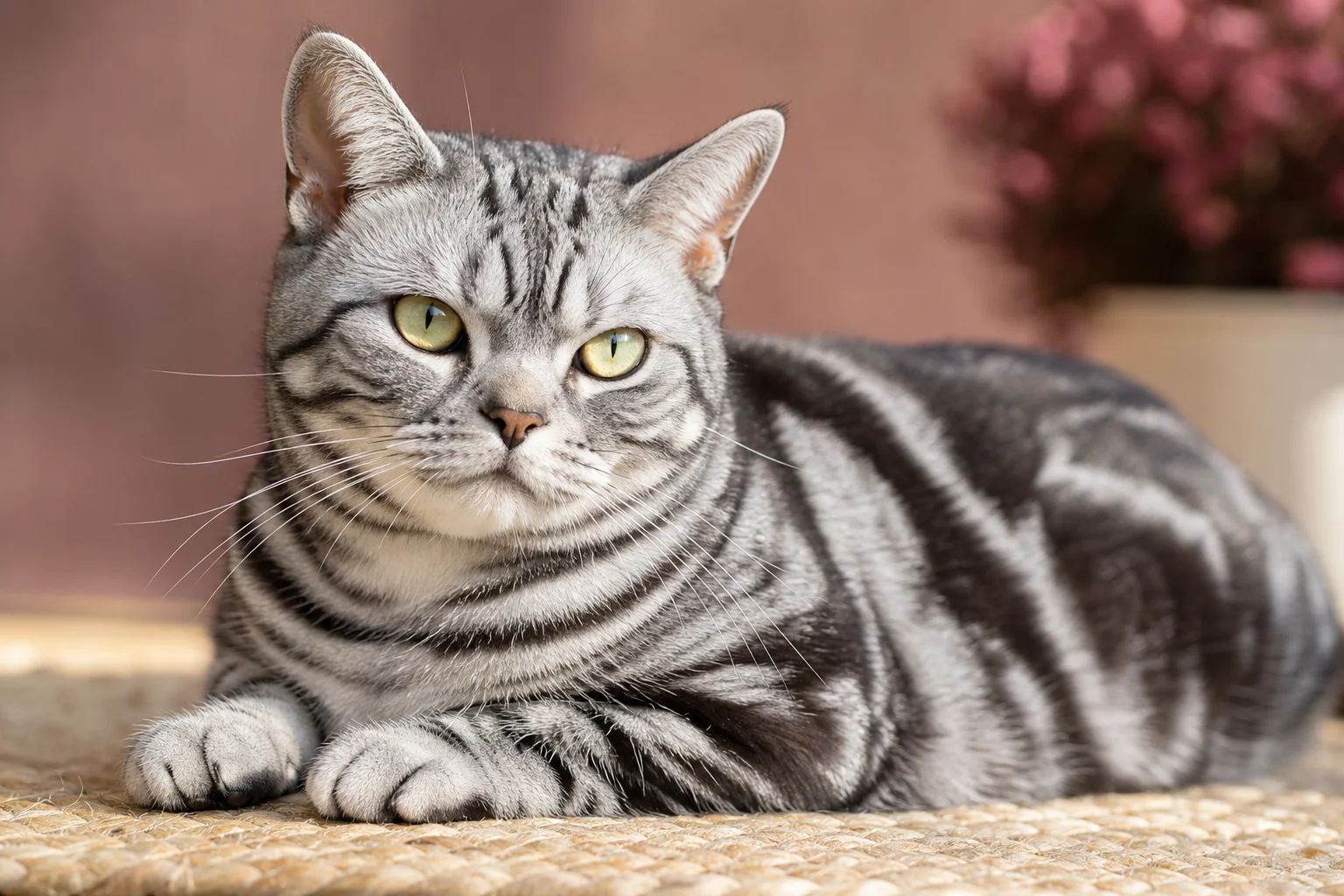
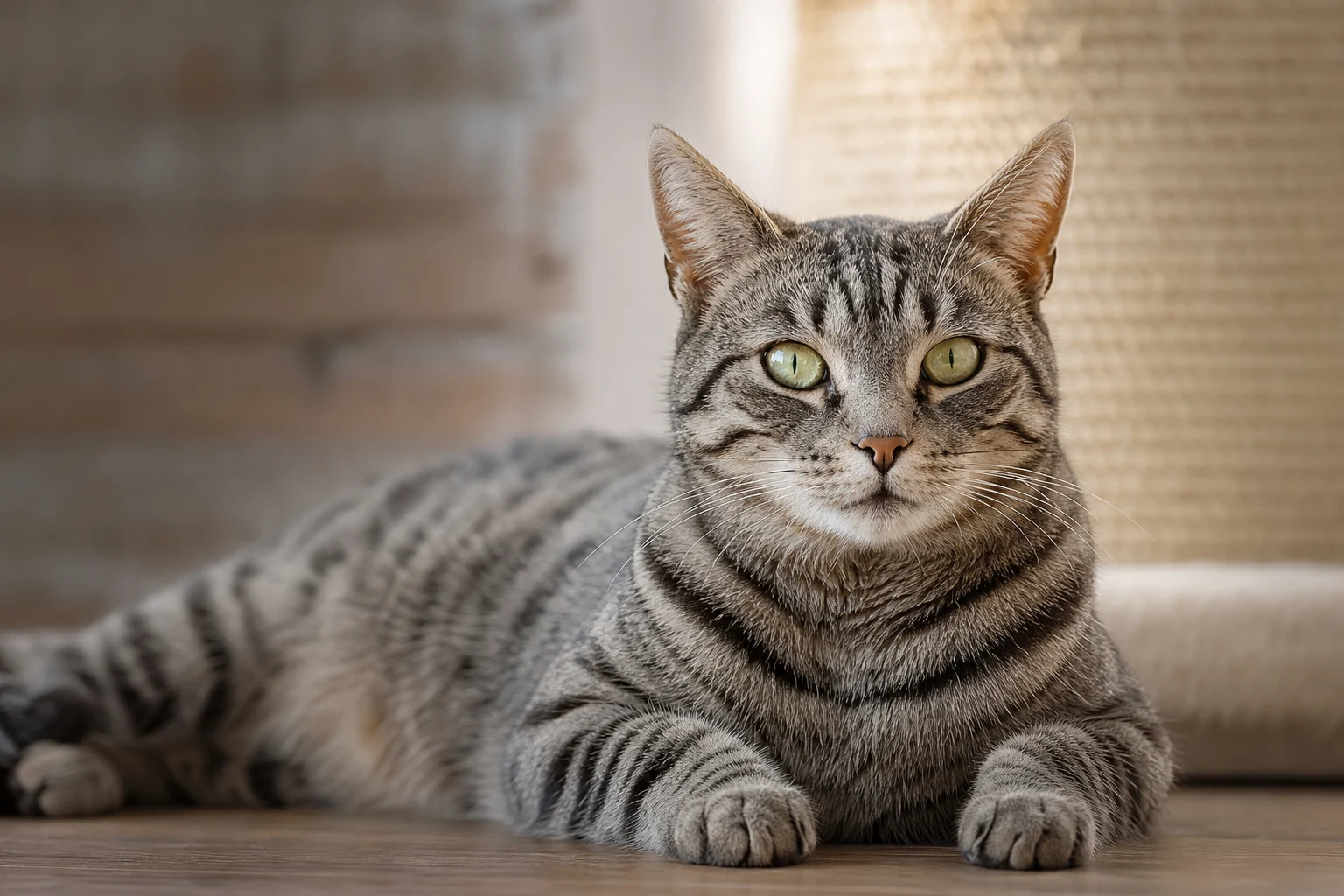
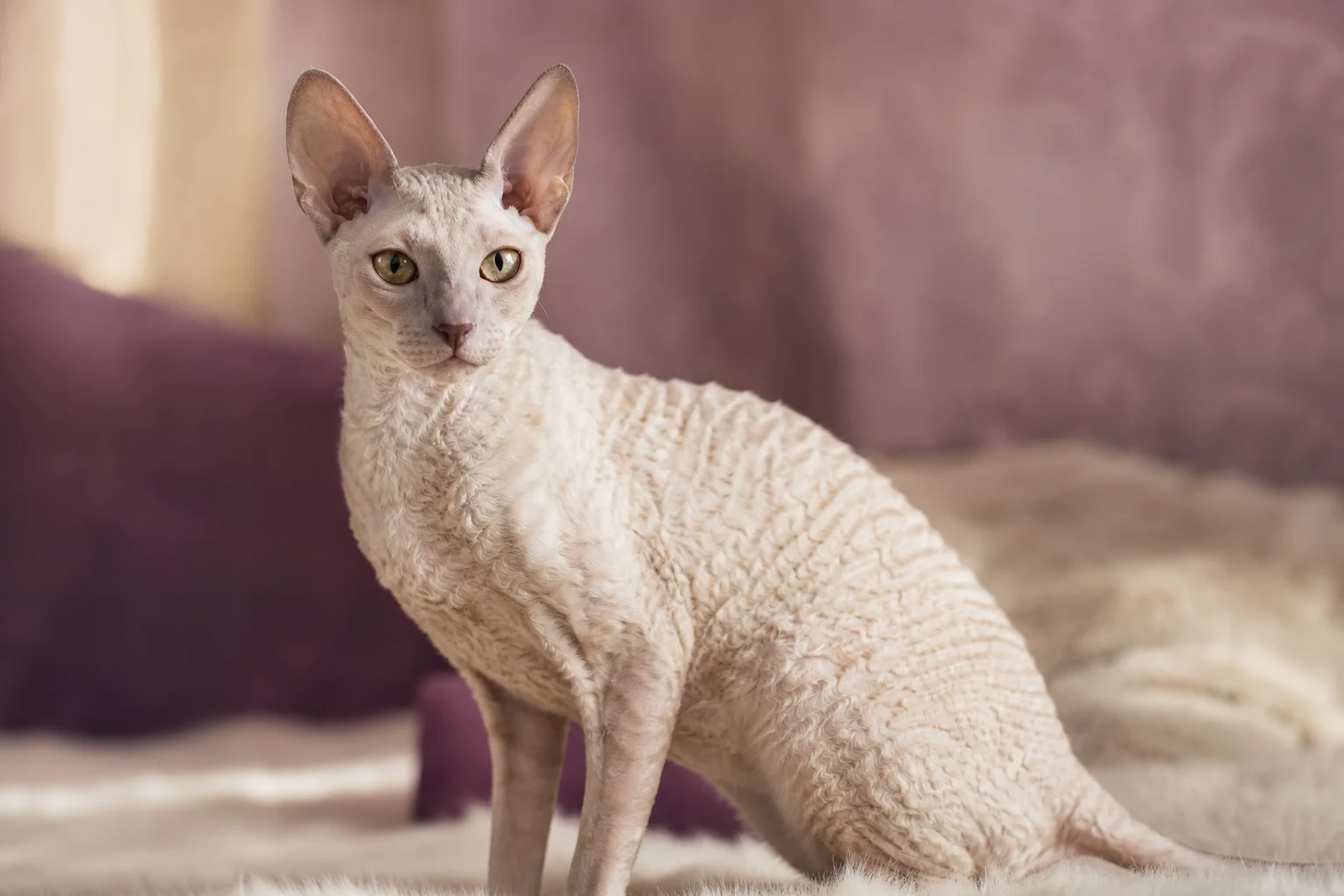
The American Shorthair is the straight-coated standard-sibling; the European Shorthair the continental parallel; the LaPerm the curly American cousin from the softer end.
Who this breed suits
Families and first-timers who want uncomplicated farm-cat virtue with a unique texture. The "Which cat fits me?" test confirms the broad fit.
Not sure what a American Wirehair may eat? The food checker rates individual foods on a traffic-light scale, and the food guide explains what cats can eat and what is toxic.
A good fit for you if …
Frequently asked questions
What makes the Wirehair coat unique?
A dominant mutation found nowhere else: every hair crimps, bends or hooks — springy steel wool with often curly whiskers. Adam, the 1966 founder, remains its only source.
How do I groom the wire coat?
Mostly not at all — brushing damages the texture. Occasional moult combing and a rare bath for oily-skinned individuals suffice.
How rare is the breed?
Among the rarest recognised anywhere — CFA registrations routinely count it last. Plan a genuine search.
Which health questions matter?
HCM checks and a question about skin sensitivity — otherwise ASH-grade working health with 12–18 years.
Is the Wirehair related to the American Shorthair?
Directly — the lines developed together and share the standard apart from the coat.
Are Wirehairs good family cats?
Textbook: patient, sturdy, animal-compatible and unflappable — farm-cat virtues in a unique jacket.
Similar breeds
Sources: FIFe/TICA breed standard · breed association data · editorial assessment · Last updated 08/2026. On health questions this article never replaces a visit to the vet.