Understanding scratching: the right scratching post
 AI
AIShredded sofa corners are one of the most common points of friction between humans and cats. Yet scratching is not naughtiness but a deeply rooted basic need. Understand why cats scratch, and you can offer the right alternative — and save the furniture.
Why cats scratch
Scratching serves several purposes at once:
- Claw care: scratching sheds the worn outer horn layer of the claw, revealing a sharp new tip underneath.
- Territory marking: scratch marks are a visible signal, and scent glands in the paws leave an olfactory business card on top.
- Stretching and muscle work: the long stretch mobilises back, shoulders and paws — favourite moment: right after waking up.
Scratching cannot be trained away — it can only be redirected to the right place.
The right scratching post
For the cat to prefer the post over the sofa, the post has to serve its needs better:
- Stability: the post must stand absolutely tip-proof. If it wobbles, the cat avoids it — and returns to the reliably solid sofa.
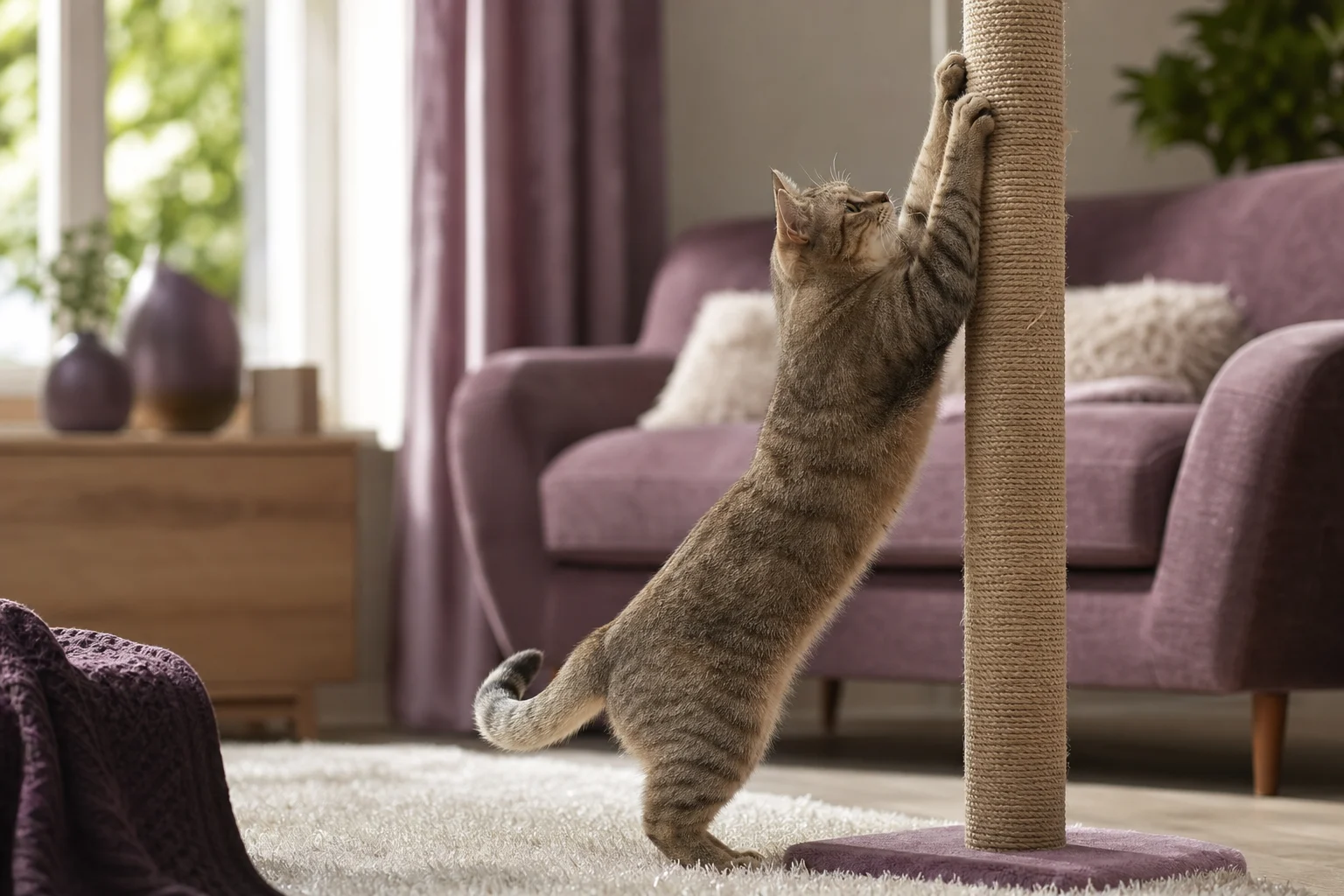
- Height: the cat must be able to stretch to full length while scratching. Too-short boards get snubbed.
- Material: sisal is the most popular and durable scratching surface; some cats also like cardboard or wood.
- Several offers: distribute scratching options through the home — above all where the cat sleeps and where it has scratched so far.
Horizontal or vertical?
Cats have individual preferences. Watch where yours scratches: high up the door frame means it wants a tall vertical post; working the carpet means a horizontal board or mat is the better answer. In doubt, offer both.
Redirecting from sofa to post
The most effective trick: place the attractive alternative directly next to the current scratching spot and make the furniture spot unattractive at the same time — double-sided tape, which cats dislike on their paws, works well. Praise and reward every scratch at the post.
And crucially: never punish. Scolding or water spraying creates stress and distrust without touching the need itself — the cat simply scratches when you are not looking. Patience and positive reinforcement get there much faster.
Placing the post where it matters
Even the best post stays unused in the wrong spot. Scratching is marking, and marking happens where life happens — so the post belongs near the favourite sleeping place (cats scratch right after waking), at a window or in the living area, not in a remote corner. An extra scratching board exactly at the abused sofa spot redirects the habit precisely. Once the post is reliably accepted, you can migrate it step by step to a more discreet position.
Which post for which cat?
Size and build should match the animal. Big, heavy breeds such as the Maine Coon or the Norwegian Forest Cat need an especially stable, tall post with a strong trunk and wide platforms that carry their weight — many standard models are too flimsy. Kittens enjoy low entries and plenty of play and hiding spots; seniors prefer easily reachable, not-too-high scratching surfaces. Active climbers profit from ceiling-high models or a whole climbing landscape with catwalks.
If the post gets ignored
A snubbed post is rarely the cat's fault. Check location and stability first — a wobbling post is a non-starter. Then make it attractive: rub it with catnip, hang a toy on it, play at it actively so the claws dig in as a side effect. Reward every scratch at the post and make the furniture spot unattractive in parallel. With a little patience, the allowed alternative almost always wins.
Claw care — and what is taboo
Outdoor cats mostly wear their claws down themselves; indoor cats and seniors can develop overlong or ingrowing claws. Check regularly and, if needed, trim only the transparent tip — never into the pink, blood-supplied quick. If unsure, have the vet show you. Surgical claw removal (declawing) amputates the last toe joint, causes lasting pain and is banned in Germany, where this site's operator is based, as well as in many other countries — the only right solution is proper scratching options.
More on making a home genuinely cat-friendly is in the guide Indoor cat or outdoor cat?
Frequently asked questions
Why do cats scratch?
Scratching serves several needs at once: it maintains the claws (the outer horn layer sheds), marks territory visually and via scent glands in the paws, and stretches the muscles. It is a basic need, not misbehaviour.
What matters in a scratching post?
Stability and height: the post must be tip-proof and let the cat stretch to full length. Sisal is the most popular scratching material. Several scratching options in different places beat a single one.
My cat scratches the sofa — what helps?
Place an attractive alternative (scratching board or post) right next to the preferred spot and make the furniture spot unattractive (e.g. with double-sided tape). Praise the cat when it uses the alternative. Never punish — that only creates stress.
Should the scratcher be horizontal or vertical?
That is individual: some cats prefer scratching vertically (post), others horizontally (board or cardboard on the floor). Watch how your cat scratches the sofa or carpet and offer the matching orientation.
Is capping or removing claws a solution?
No. Surgically removing claws (declawing) is banned in Germany and against animal welfare. The solution is suitable scratching options and regular claw care, if needed by carefully trimming the claw tips.
Where should the scratching post stand?
In a visible, well-used spot — near the favourite sleeping place, at the window or in the living area. A remote corner is often avoided. A scratching board exactly at the previously scratched sofa spot redirects the scratching.
Which scratching post suits large breeds?
Large, heavy breeds such as the Maine Coon or Norwegian Forest Cat need an especially stable, tall post with a strong trunk and wide, load-bearing platforms. Many standard models are too wobbly for them.
My cat ignores the scratching post — what helps?
Check location and stability, rub the post with catnip, hang toys on it and play at it actively. Reward every scratch at the post and make the previous furniture spot unattractive at the same time.