 AI
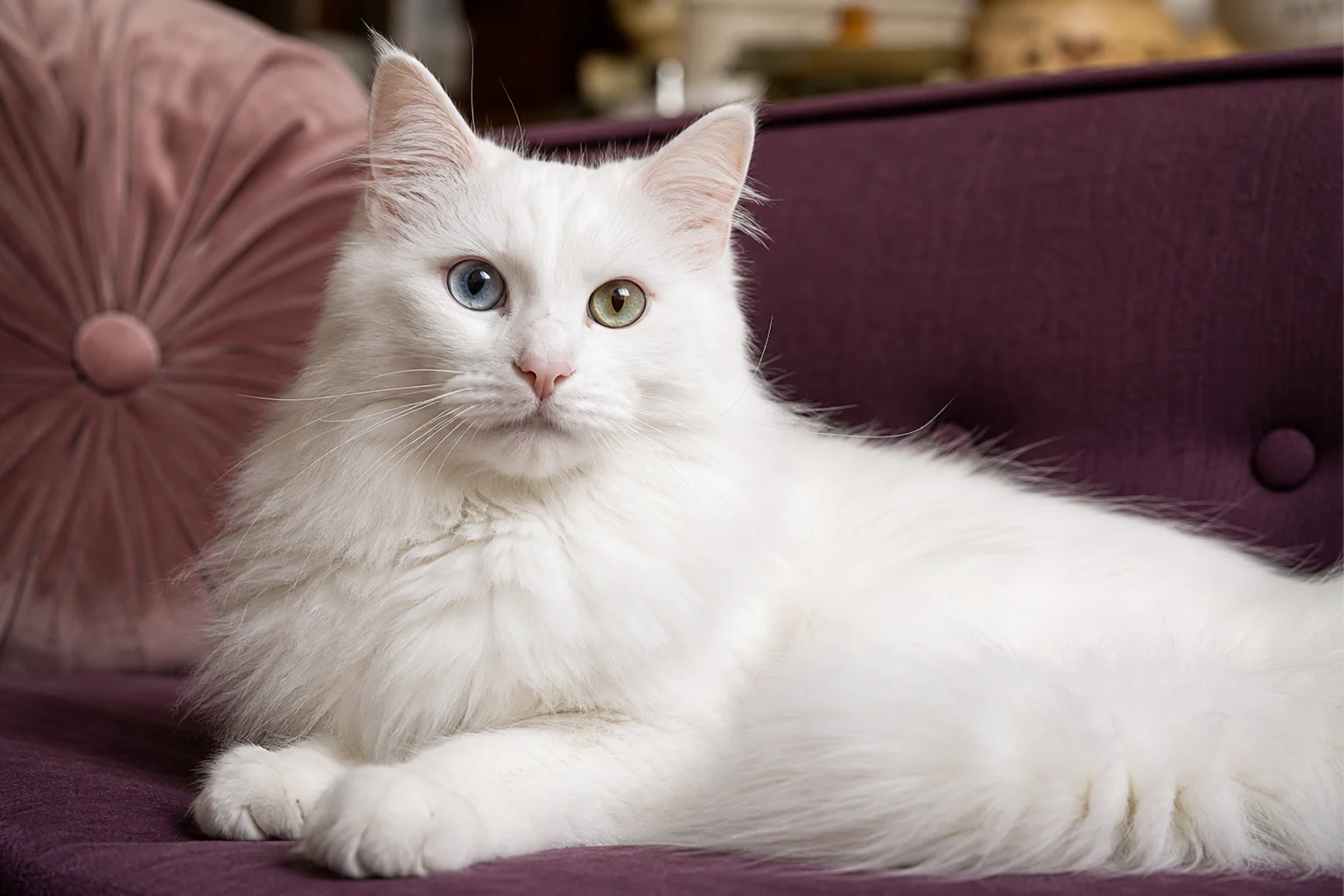
AITurkish Angora
Turkey's silky national treasure — quick, clever and elegantly attached to its chosen people.
| Size | Medium |
|---|---|
| Weight | 4 kg |
| Life expectancy | 13–18 years |
| Origin | Türkiye |
| Type | Natural breed (Türkiye) |
| Grooming | medium |
| Activity needs | very high |
| Beginner friendly | well suited |
Temperament & suitability
Editorial assessment based on the FIFe breed standard and breed association data.
Guideline for movement & enrichment for this breed.
Traits
Origin & history
Long before Persians ruled the longhair world, Europe's first flowing-coated cats came from Ankara — Angora cats charmed French and English courts from the 1600s. Ironically, Persian breeding then absorbed the type so thoroughly that the original nearly vanished; Ankara Zoo ran a state preservation programme for the white, odd-eyed classic, from which modern breeding was rebuilt in the 1950s and 60s. Today's Angora is Turkey's living national treasure in all colours, not just white.
Appearance & size
A slim, fine-boned ballerina of around four kilograms under a silky, flowing single coat — no woolly undercoat, which keeps the elegance light and the grooming easy. The plumed tail carries like a banner. White with blue, amber or odd eyes remains the icon, but solid, tabby and bicolour variants share full recognition. Life expectancy is excellent: thirteen to eighteen years.
Personality & temperament
Behind the porcelain look works a quick, determined mind. The Angora is lively, athletic and inventive — an opener of doors, a surveyor of wardrobes — and attaches intensely to its people, often electing a favourite whom it supervises with charming persistence. It converses in soft tones, insists on participating and stays playful lifelong. Porcelain it is not: this is a confident, sometimes wilful companion.
Indoor or outdoor living
Content indoors with vertical territory and daily engagement; a secured balcony or catio delights it. The silky coat handles weather better than it looks, but the breed's trusting curiosity belongs behind safety nets. Frame in Indoor cat or outdoor cat?
Enrichment & activity
Plan genuine daily play: hunting games, fetch (a breed favourite), climbing paths and puzzle feeders. The clever head needs employment — a bored Angora reorganises shelves with the dedication of a poltergeist. A second lively cat shares the programme well.
Grooming
Delightfully easy for a semi-longhair: no undercoat means no matting drama. Combing once or twice a week keeps the silk flowing, a little more in moult.
Feeding & health
A robust natural breed. Two breeder questions: in white, blue-eyed lines, hearing tests (BAER) — the white-coat deafness link applies here — and HCM checks as general good practice. Feed the athletic metabolism via the food amount calculator.
Costs
Kittens from tested lines cost €700–1,100; genuinely typed Angoras are rarer than the name suggests. Running costs stay ordinary — the cat cost calculator knows the details.
For beginners, children and other pets
A lively, robust family companion that enjoys play-loving children and gets along with cats and friendly dogs. Beginner-suitable for households that honour the daily engagement — this is an easy cat with an active calendar.
Similar breeds compared
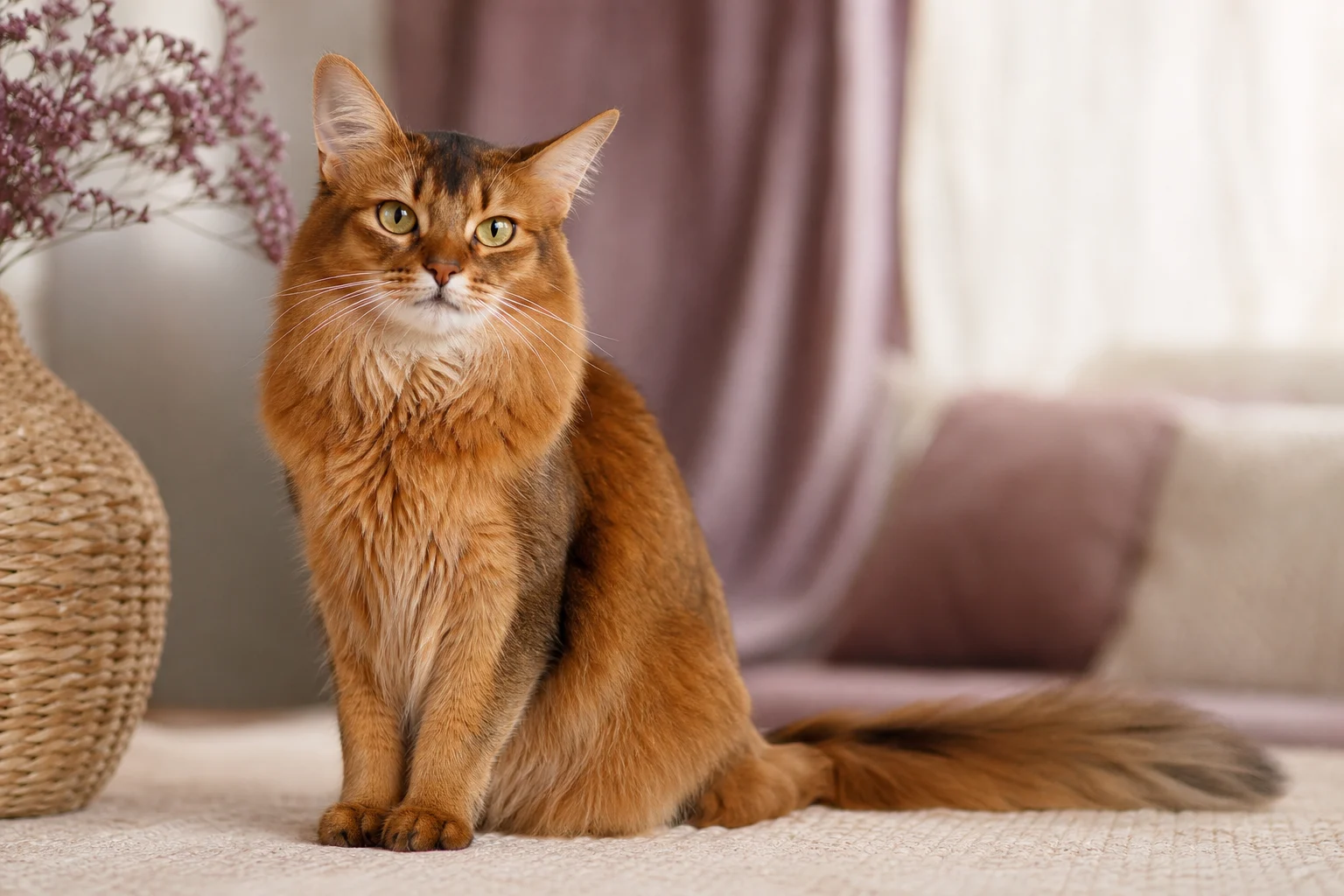
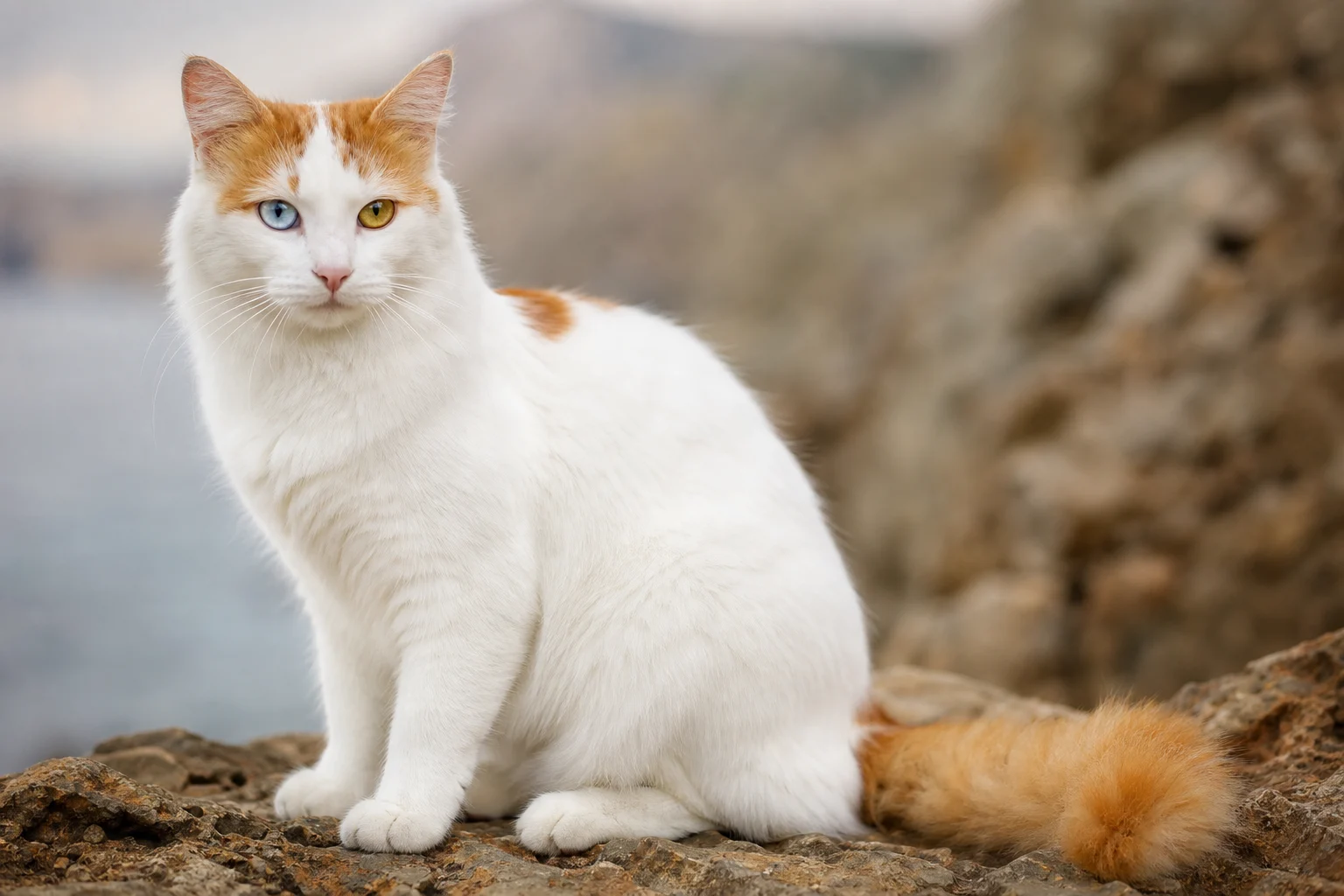
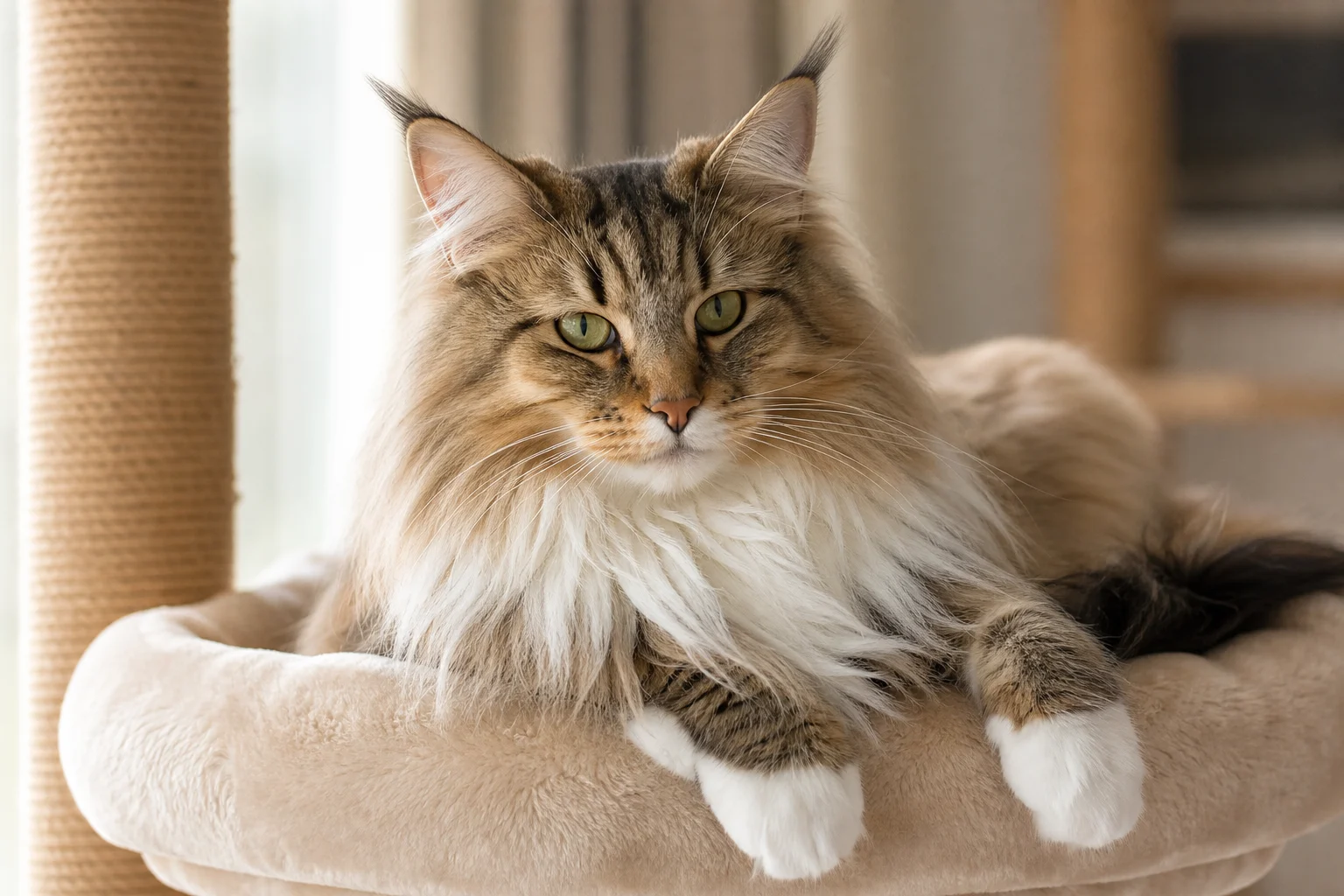
The Turkish Van is the bigger, water-loving compatriot; the Somali matches the lively silk elegance in ticked wildcolours; the Norwegian Forest Cat offers flowing coats in a calmer, larger format.
Who this breed suits
Active households that want an elegant, clever companion with opinions. See how the Angora scores in the "Which cat fits me?" test.
Not sure what a Turkish Angora may eat? The food checker rates individual foods on a traffic-light scale, and the food guide explains what cats can eat and what is toxic.
A good fit for you if …
Frequently asked questions
Are all Turkish Angoras white?
No — the white, odd-eyed classic is the icon, but the breed is fully recognised in solid, tabby and bicolour variants.
Are white Angoras deaf?
White cats with blue eyes carry an elevated deafness risk — reputable breeders BAER-test their white kittens and disclose results.
How much grooming does the silk need?
Little: without undercoat the coat barely mats. Combing once or twice a week keeps it flowing.
How active are Angoras?
Distinctly: climbing, fetch and supervision projects fill their day. Plan real engagement — this is no porcelain figure.
Do Angoras bond to one person?
Often noticeably — a favourite human gets elected and supervised, while the rest of the family stays warmly accepted.
Turkish Angora or Turkish Van?
The Van is larger, sturdier and famous for swimming; the Angora finer, livelier and fully coloured. Both are proud Turkish natural breeds.
Similar breeds
Sources: FIFe/TICA breed standard · breed association data · editorial assessment · Last updated 08/2026. On health questions this article never replaces a visit to the vet.