 AI
AIMekong Bobtail
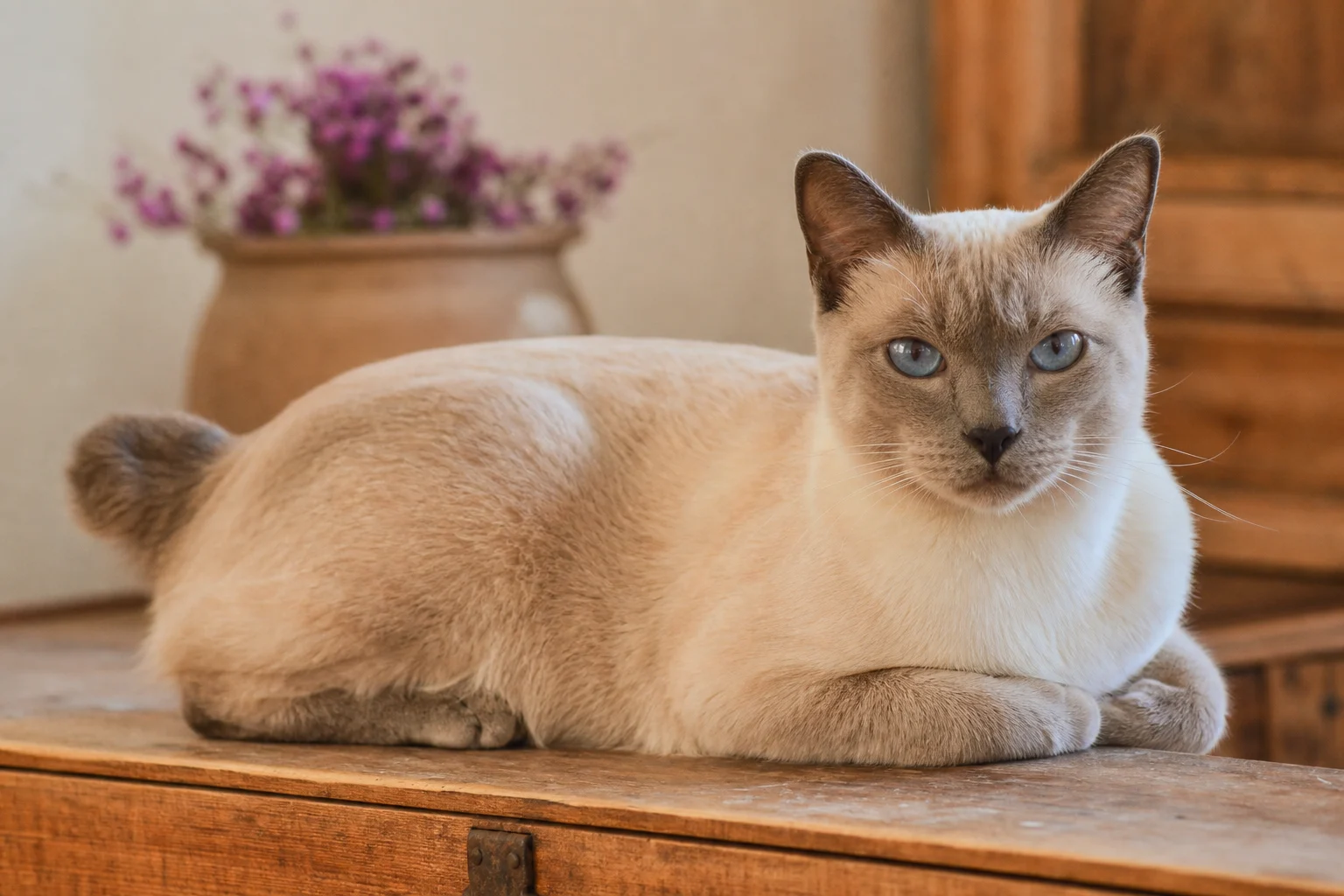
A pointed bobtail from the Mekong — royal Siamese looks, kinked pompom and devoted, chatty warmth.
| Size | Medium |
|---|---|
| Weight | 3–5 kg |
| Life expectancy | 14–18 years |
| Origin | Southeast Asia / Russia |
| Type | Natural breed |
| Grooming | low |
| Activity needs | high |
| Beginner friendly | well suited |
Temperament & suitability
Editorial assessment based on the FIFe breed standard and breed association data.
Guideline for movement & enrichment for this breed.
Traits
Origin & history
Along the Mekong from Thailand to Vietnam, pointed cats with kinked, shortened tails have lived for centuries — legend says palace cats guarded treasure rings on their bent tails. Tsar Nicholas II supposedly received two hundred such cats as a royal Siamese gift; Russian fanciers preserved the type through the 20th century and standardised it as the Mekong Bobtail, recognised by WCF in 2004. It is, in effect, old Siam with a pompom — a natural bobtail gene unrelated to the Manx line.
Appearance & size
A lithe, elegant three-to-five-kilogram cat in classic Siamese dress — seal, blue, lilac and red points with vivid blue eyes — ending in a unique kinked bobtail of at least three vertebrae, each tail individually bent and curled like the Japanese Bobtail's fingerprint pompoms. The build is old-type moderate, the coat short close silk. Life expectancy runs long: fourteen to eighteen years.
Personality & temperament
Siamese-family software at warm volume: the Mekong is people-devoted, conversational in expressive tones, clever with doors and games and famously dog-like — following, fetching, walking on leashes. Russian fanciers describe balanced nerves and a notable gentleness with children; the breed integrates warmly with cats and known dogs. Company remains the family requirement: alone-time wounds it.
Indoor or outdoor living
Indoors with secured balcony; rarity and trust forbid roaming. Moderate space plus genuine company covers the needs — a second social cat carries work hours; see keeping several cats.
Enrichment & activity
Daily interactive sessions: fetch, teaser hunts, clicker games, puzzle rotations. Energy is warm mid-high with proper lap evenings.
Grooming
A weekly silk polish; shedding is light. The kinked tail needs no care — only gentle handling, as the fused curves should never be straightened by force.
Feeding & health
A robust natural base with excellent longevity; the bobtail gene is harmless. Standard asks: general documentation, heart checks and the Siamese-family questions (PRA line history). Portion via the food amount calculator.
Costs
Kittens cost €700–1,200, mostly via Russian and Eastern European catteries — rare in Western Europe, waiting lists apply. Running costs are modest; the cat cost calculator totals them.
For beginners, children and other pets
A warm family companion: gentle with children, sociable with cats and dogs, beginner-suitable where company is real. The pompom is conversation-starter and breed passport in one.
Similar breeds compared
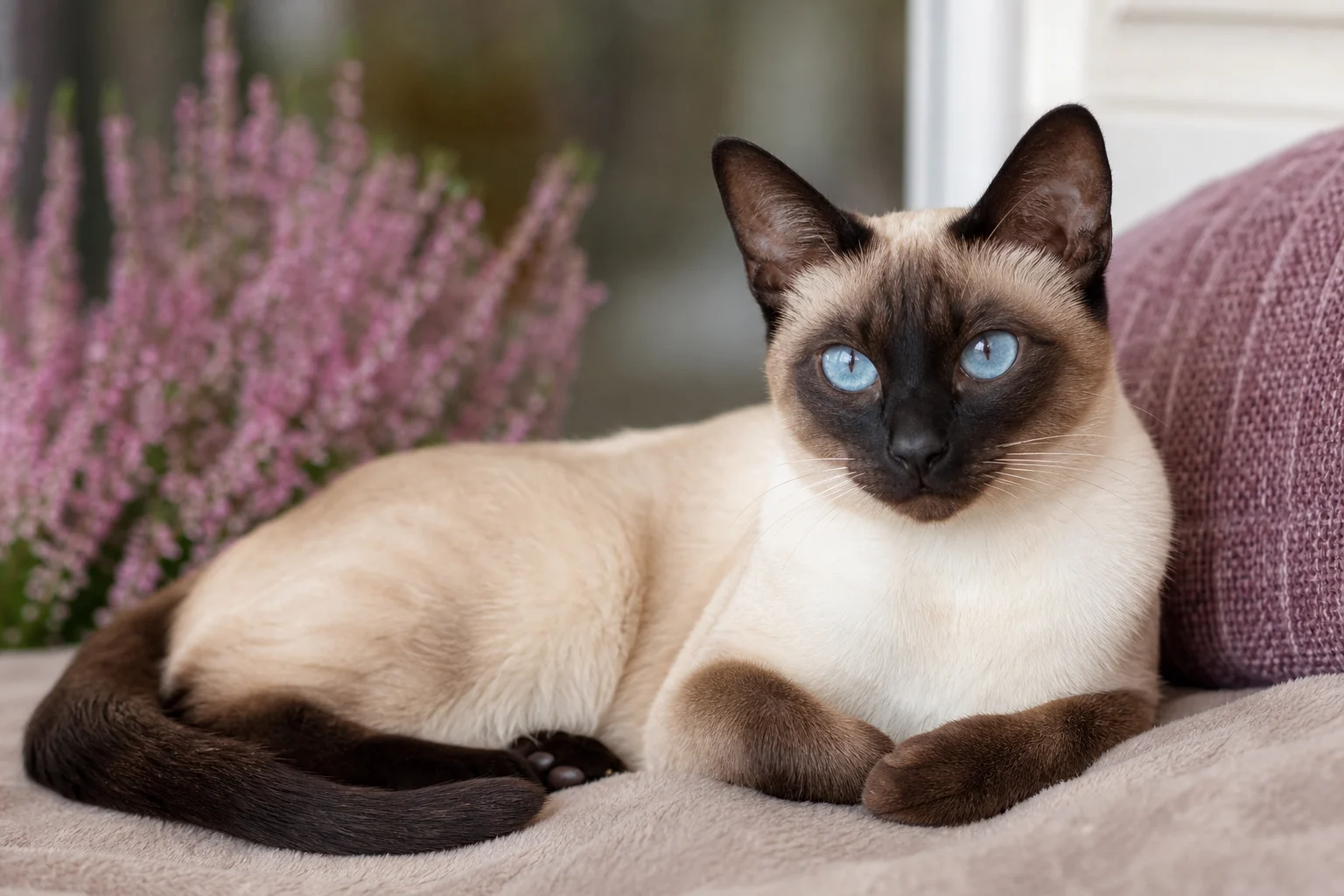
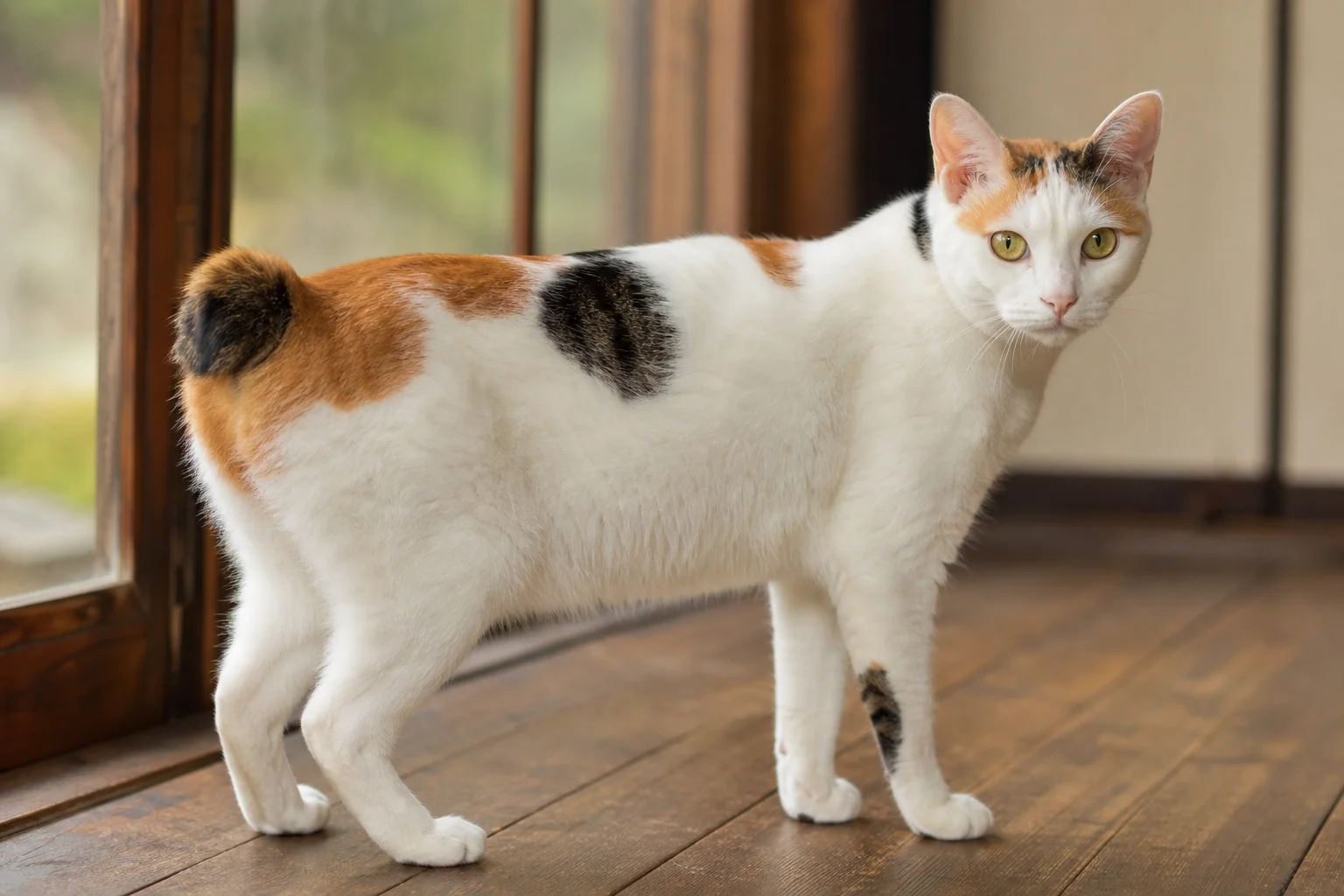
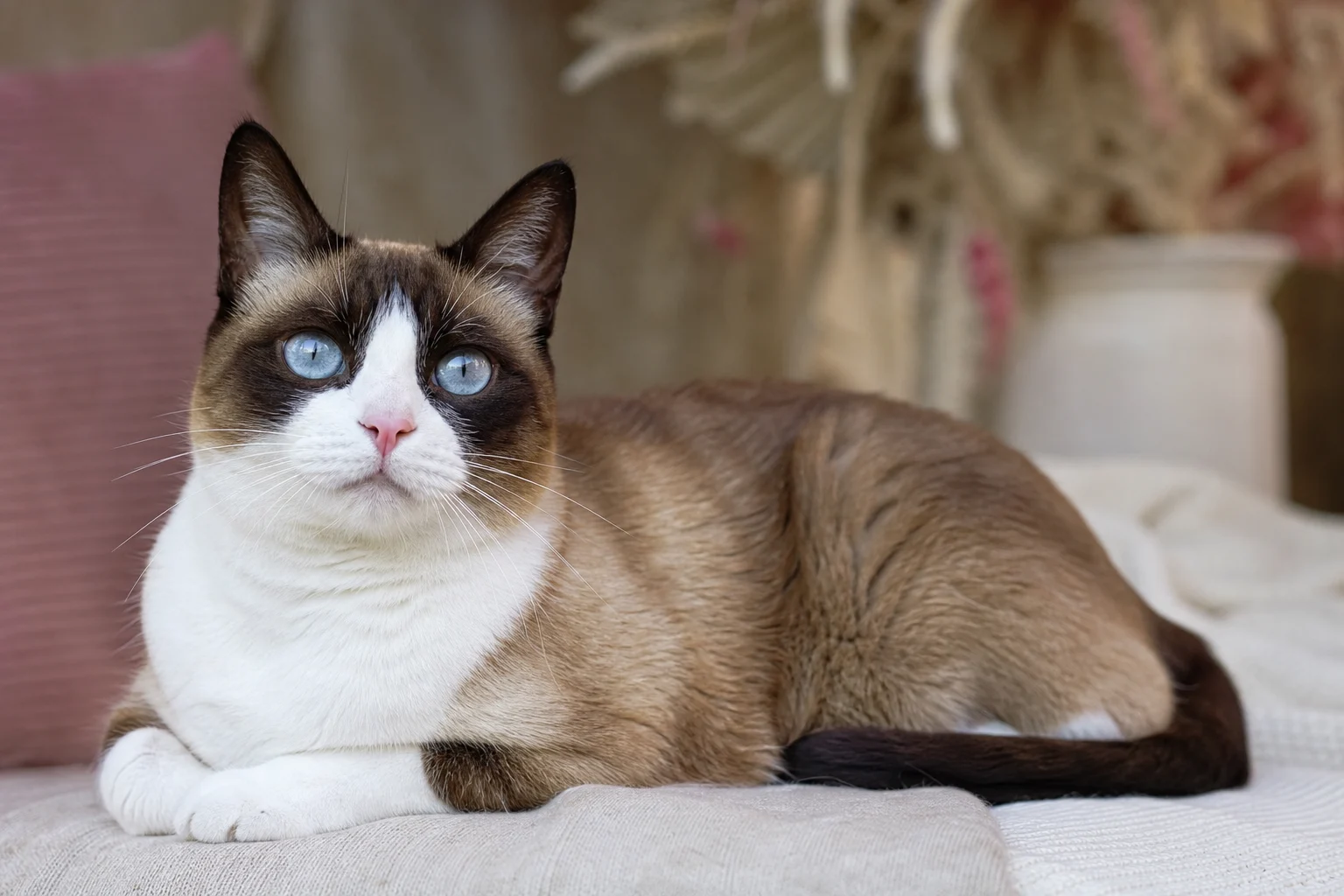
The Siamese is the full-tailed family origin; the Japanese Bobtail the parallel pompom from Japan; the Snowshoe the pointed family charmer in white boots.
Who this breed suits
Present households that want royal Siamese devotion with a lucky kink. The "Which cat fits me?" test confirms the fit.
Not sure what a Mekong Bobtail may eat? The food checker rates individual foods on a traffic-light scale, and the food guide explains what cats can eat and what is toxic.
A good fit for you if …
Frequently asked questions
Where does the Mekong Bobtail come from?
From the centuries-old pointed bobtail cats along the Mekong, preserved and standardised by Russian fanciers — WCF-recognised since 2004.
Is the kinked tail healthy?
Yes — a harmless natural gene unrelated to the Manx line. The fused curves simply must never be forcibly straightened.
How does it differ from the Siamese?
The pompom, the old-type moderate build and a slightly warmer volume — the devotion and chatter are family heritage.
Which health questions matter?
General documentation, heart checks and PRA line history — plus the reassurance of 14–18-year longevity.
Are Mekong Bobtails good with children?
Notably gentle — Russian fanciers highlight exactly this, alongside the dog-like following.
How rare is the breed here?
Rare in Western Europe — plan a patient search via Eastern European catteries.
Similar breeds
Sources: FIFe/TICA breed standard · breed association data · editorial assessment · Last updated 08/2026. On health questions this article never replaces a visit to the vet.