Litter box & litter: making the right choice
 AI
AIWhen a cat stops using the litter tray, the cause is almost never the cat — it is the tray. Number, size, location, litter and cleanliness decide whether the quiet place works. Get these five factors right and house-soiling rarely ever becomes an issue.
How many trays — and how big
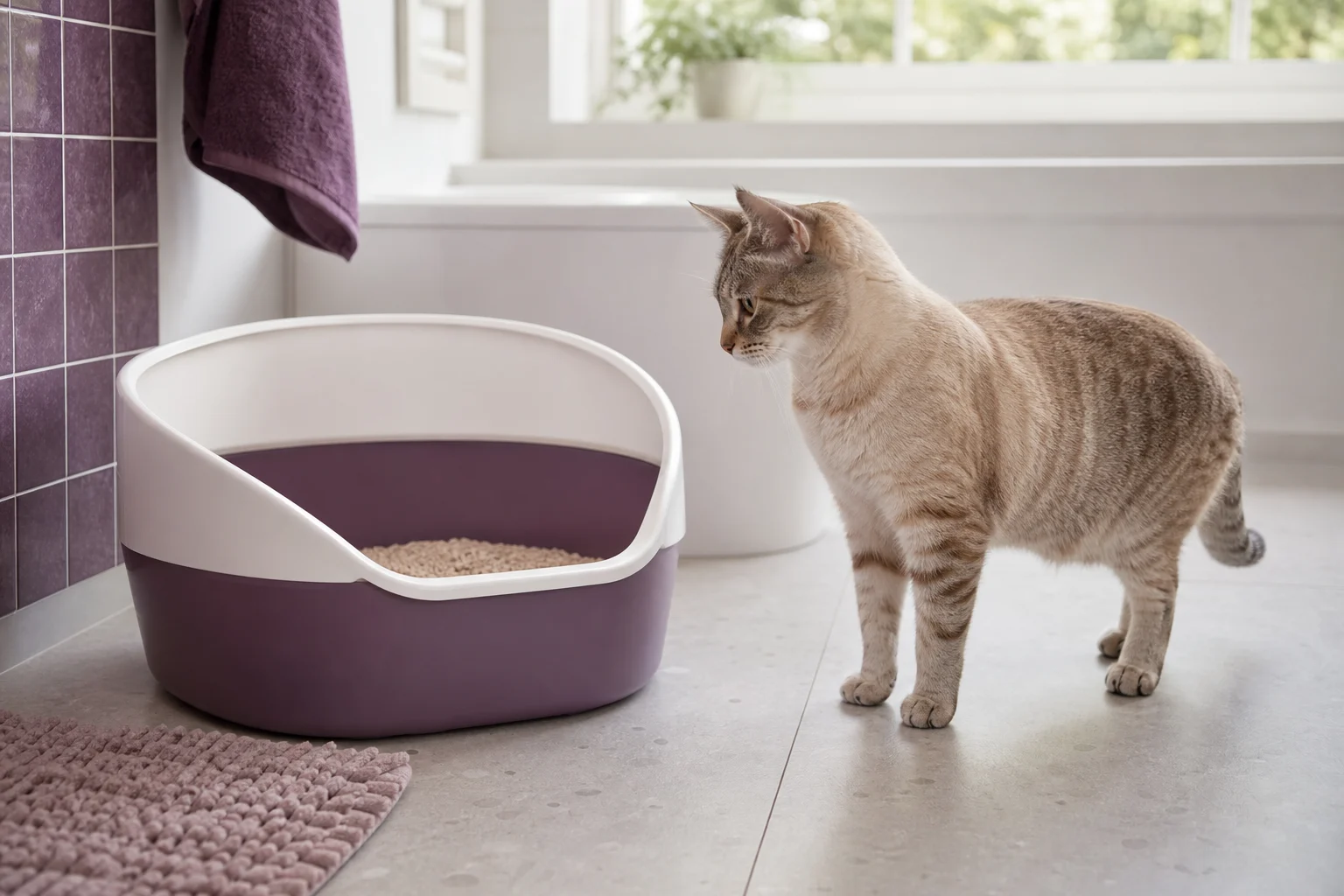
The rule of thumb: one tray per cat, plus one extra. One cat, two trays; two cats, three — placed in different spots, not lined up next to each other. Size matters more than design: the tray should measure at least one and a half cat lengths so the cat can turn comfortably. Most commercial trays are built for the shelf, not the cat — bigger is practically always better, and a large storage box with an entry cut into it beats many bought models.
Open or hooded?
Hoods solve a human problem — hiding sight and smell — and create a feline one: odours concentrate inside, the view out is blocked, and an ambush at the exit (in multi-cat homes) cannot be seen coming. Many cats therefore prefer open, large trays. If you are unsure, offer both variants and let the cat vote with its paws. If a hood it must be, skip the flap door at least.
The right location
- Quiet and low-traffic — not in the hallway rush, not next to the noisy washing machine.
- Never next to food and water — cats strictly separate the two zones.
- Escape-friendly — no dead ends where the cat feels cornered; it wants an overview while it is vulnerable.
- Reachable on every floor the cat uses, especially for kittens and seniors.
Which litter cats like
Most cats prefer fine, sand-like, clumping litter — it matches what their paws expect from evolution. Coarse pellets and strongly perfumed litters are common rejection reasons; the perfume pleases the buyer, not the cat. More important than brand or type: once a litter is accepted, stay with it. If you must switch, mix the new litter in gradually over one to two weeks. Fill height: five to seven centimetres, enough to dig and bury properly.
Cleaning: the most important factor of all
Scoop clumps and faeces daily, ideally twice. Change the full litter and wash the tray with hot water regularly — without harsh or strongly scented cleaners, whose smell repels cats. A tray you would not want to step into barefoot, the cat does not want to step into either.
When the cat goes elsewhere
Sudden house-soiling has a cause, and the checklist is short: enough trays? Clean? Right location? Litter unchanged? Hood removed? New stress in the household — a move, a new pet, construction noise? And crucially: rule out illness first. Cystitis and urinary crystals are common, painful and make cats avoid the tray because they associate it with pain. A cat that suddenly pees outside the tray, strains often or cries while urinating belongs at the vet — a male cat that cannot pass urine at all is an acute emergency.
Never punish. The cat is not protesting; it is telling you something is wrong. Clean soiled spots with enzyme cleaner (not ammonia-based products, whose smell resembles urine) so no scent mark invites a repeat.
Special cases: kittens, seniors, multi-cat homes
Kittens need shallow trays they can climb into and should find a tray near their base room — the way across the flat is long for small legs. Seniors with arthrosis struggle with high rims; a low entry or a small ramp keeps the tray accessible, and trays on every floor spare old joints. In multi-cat households, distribute the trays so no cat can guard them all — the background is in the guide on keeping several cats.
A new kitten moving in? The settling-in guide covers the tray introduction on day one.
Frequently asked questions
How many litter boxes do you need?
Rule of thumb: one per cat plus one extra. With one cat that means two, with two cats three — placed in different, quiet spots.
Open box or hooded?
Many cats prefer open, large boxes: hoods trap odours (which humans like but cats dislike) and restrict the view. In doubt, offer both and let the cat decide.
Which litter is best?
Most cats like fine, clumping litter reminiscent of sand. Heavily perfumed litter is often rejected. More important than the brand is not to keep switching a litter once accepted.
Where should the litter box stand?
Quiet, easy to reach and not next to the food or in a draughty, loud spot (e.g. next to the washing machine). Avoid dead ends where the cat feels cornered.
My cat is becoming unclean — why?
Almost always for a reason: too few or too dirty boxes, wrong location, disliked litter, a hood — or stress or illness (e.g. cystitis). With sudden uncleanliness, see the vet first.
How often must I clean the litter box?
Daily, ideally twice, removing clumps and faeces. Change the litter completely at regular intervals and wash the tray with hot water without harsh cleaners. Cleanliness is the single most important point.
How do I switch my cat to a new litter?
Only slowly: mix a small amount of the new litter under the familiar one at first and increase the share over one to two weeks. Abrupt changes are a common reason a cat suddenly avoids the box.
Which litter box suits kittens and seniors?
One with a particularly low entry. Kittens need a shallow tray they can climb into easily; seniors with arthrosis struggle with high rims. A low entry or a small ramp helps.