Cat nutrition for beginners: the basics
 AI
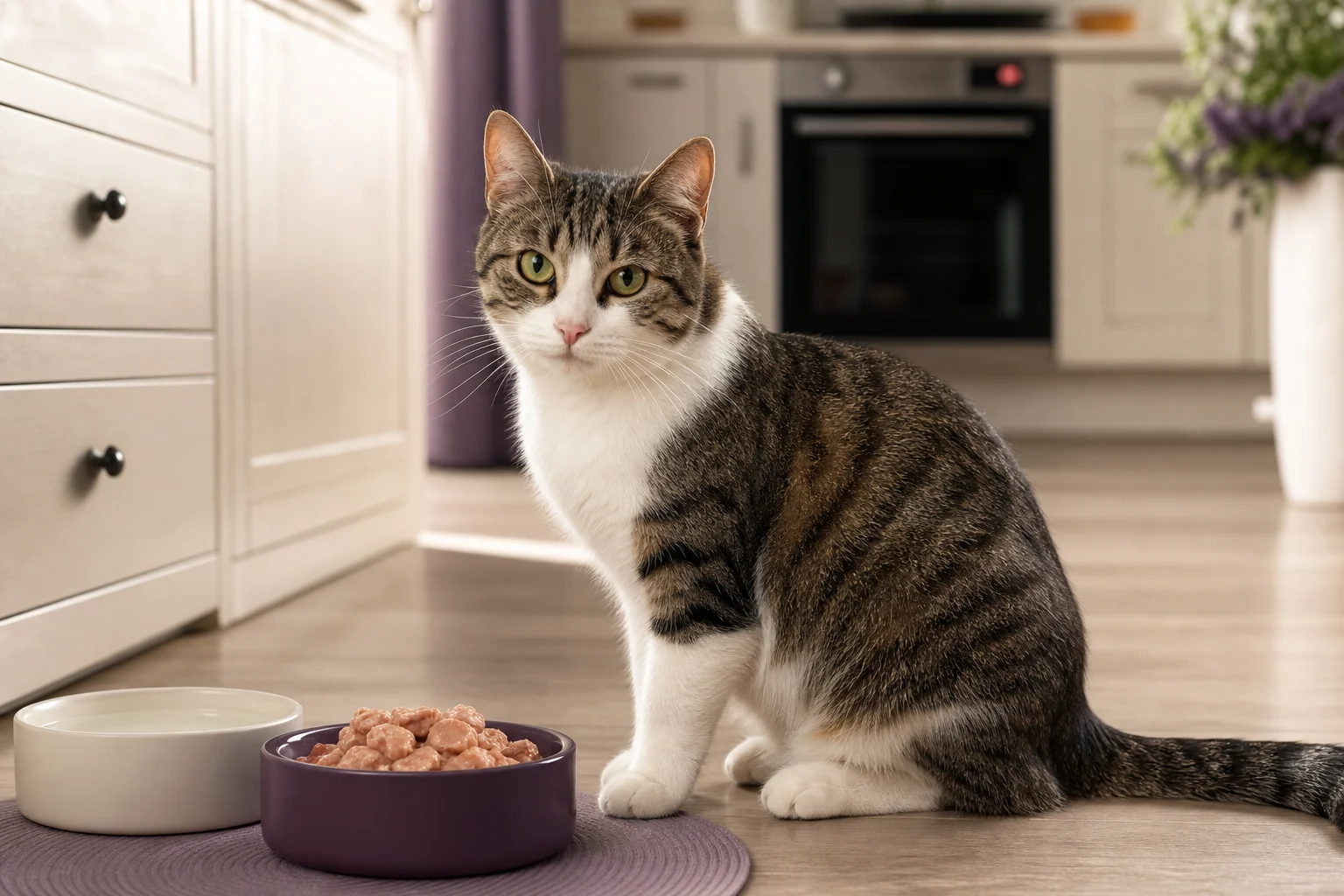
AIFeeding a cat well is not complicated — but it follows rules that differ fundamentally from human eating and from dog feeding. The most important one: cats are obligate carnivores. What that means in practice, how to judge a food, and which mistakes to avoid.
Obligate carnivore: what it really means
Cats do not just prefer meat — they depend on it. Their metabolism draws energy from protein and fat, and several nutrients are vital yet available to them only from animal tissue: the amino acid derivative taurine (deficiency causes heart muscle disease and blindness), arachidonic acid and preformed vitamin A. A vegetarian or vegan diet is therefore not a lifestyle question for cats but a health hazard and a welfare issue. The natural template is the mouse: small, protein-rich, water-rich prey, many times a day.
Wet or dry food?
The biggest practical difference is water. Wet food is about 80% moisture and mirrors prey; dry food is around 10%. Cats descend from desert animals with a weak thirst drive — they are built to eat their water, not drink it. On dry-food-only diets many cats chronically under-drink, which strains kidneys and urinary tract. The common recommendation is therefore wet food as the base, dry food at most as a supplement or in puzzle toys. Whatever the mix: fresh water always available, in several spots away from the food.
Reading the label
- "Complete food" — the crucial word. It means the food covers all needs on its own. "Complementary food" or "supplementary food" does not.
- Meat first: the ingredient list is ordered by share — meat or named animal sources belong at the top.
- Clear declaration: "chicken (60%)" tells you more than "meat and animal by-products". Sugar, caramel and large cereal shares have no business in cat food.
- kcal per 100 g: the number you need to portion correctly — our food amount calculator works with it.
How much and how often
The right amount follows from energy need — weight, neutering status and life situation — not from the bowl size. A neutered 4 kg indoor cat needs roughly 200–220 kcal a day; the calculator converts that into grams for your specific food. Feed at least two, better three to four small meals: cats are snackers whose stomachs handle many small portions better than one big one. Treats count fully and should stay under 10% of daily calories.
What never belongs in the bowl
Off limits are chocolate, onions and garlic in every form, grapes and raisins, alcohol, raw yeast dough, the sweetener xylitol and caffeine. Cow's milk causes diarrhoea in most adult cats, and heavily salted or seasoned leftovers strain small kidneys. The full traffic-light overview lives in our food guide, and the food checker answers single foods in seconds.
If your cat has eaten something toxic, contact the vet or the emergency service immediately — many poisonings act with a delay, and waiting for symptoms wastes the decisive hours.
Special cases: kittens, seniors, sensitive cats
Kittens need energy-dense rearing food in three to four meals and any food change done gradually — details in the kitten guide. Seniors often benefit from easily digestible food and more frequent, smaller portions; weight loss in an old cat is a vet topic, not a diet project. For sensitive stomachs, the classic bland diet of unseasoned cooked chicken with a little soft rice bridges a day or two — longer digestive trouble belongs at the vet.
Raw feeding (BARF): honest words
Feeding raw mimics prey and can work well — but only with precise supplementation of taurine, calcium and vitamins. Casually feeding kitchen meat is not BARF; it is an unbalanced diet with hygiene risks, and raw pork is strictly off limits. For most owners, a high-quality complete wet food or ready-made complete frozen menus are the safer route.
Which breed fits your feeding routine and everyday life? The "Which cat fits me?" test knows.
Frequently asked questions
Why are cats obligate carnivores?
Cats need animal protein and certain nutrients such as taurine, arachidonic acid and vitamin A, which they can only utilise from meat. A vegetarian or vegan diet is dangerous for cats.
Wet or dry food — which is better?
Wet food has a high water content and supports the fluid intake that matters so much for cats — a plus for kidneys and urinary tract. Many owners feed wet food as the base and dry food only as a small supplement.
What do I look for when buying food?
A high meat content (meat first in the ingredients), a clear declaration without excessive fillers and sugar, and the label "complete food". The kcal per 100 g helps with calculating amounts.
Which foods are toxic to cats?
Off limits are chocolate, onions and garlic, grapes/raisins, alcohol, raw dough and cow's milk (most cats cannot digest lactose), among others. Heavily seasoned or salted dishes are also unsuitable.
How much should my cat eat?
That depends on weight, age and neutering. Our food amount calculator estimates the daily requirement in calories and converts it into grams per food type.
How often per day should I feed my cat?
Cats are snackers. Adults should get at least two, better three to four small portions across the day, kittens more often. Cats tolerate long fasting badly — an automatic feeder helps during absences.
Why does my cat drink so little?
Cats originally come from desert regions and have a weak sense of thirst. Several water stations away from the food, wide bowls and a drinking fountain increase intake. Feeding mostly wet food helps the fluid balance most.
Is raw feeding (BARF) suitable for cats?
Done correctly yes, but it requires precise knowledge: the ration must be supplemented exactly with taurine, calcium and vitamins, otherwise deficiencies loom. For beginners a high-quality complete food or a ready-made, complete raw menu is the safer choice.